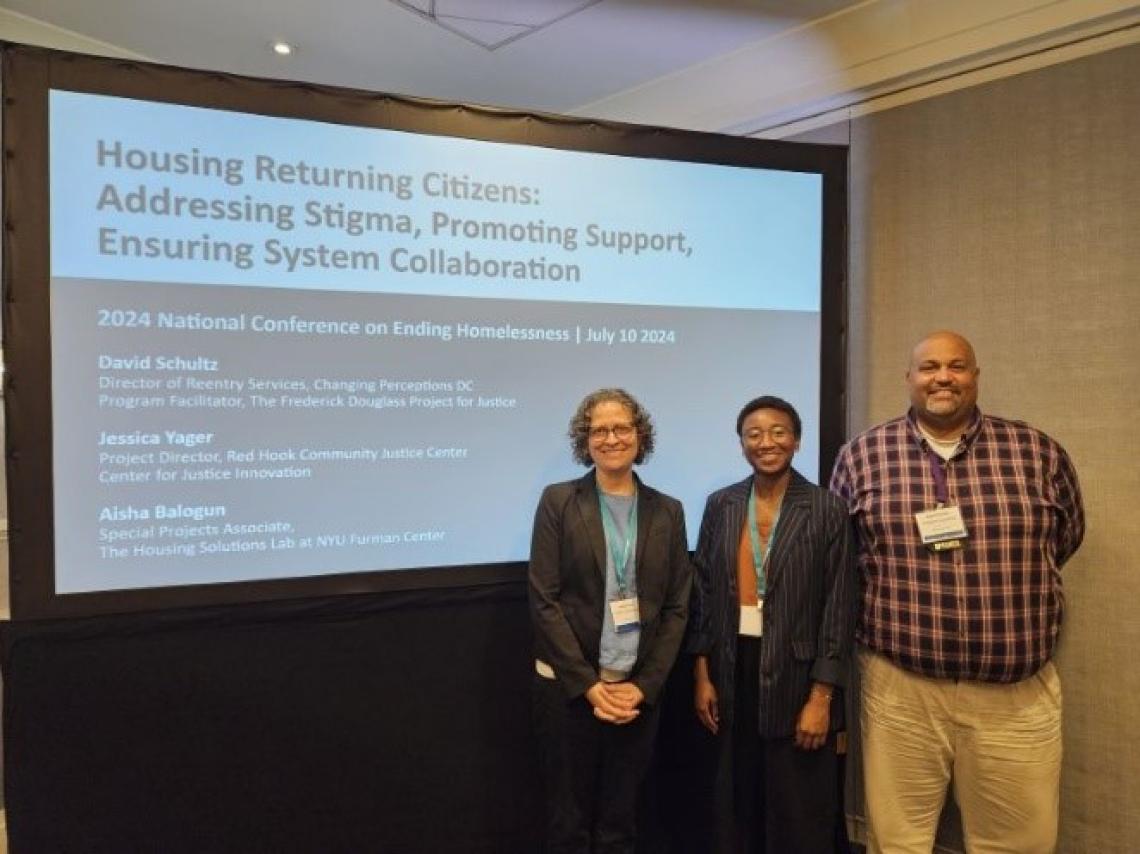
Along with partners, the Center hosted a session on the challenges returning citizens face in the housing market at the 2024 National Conference on Ending Homelessness in Washington D.C., organized by the National Alliance to End Homelessness.
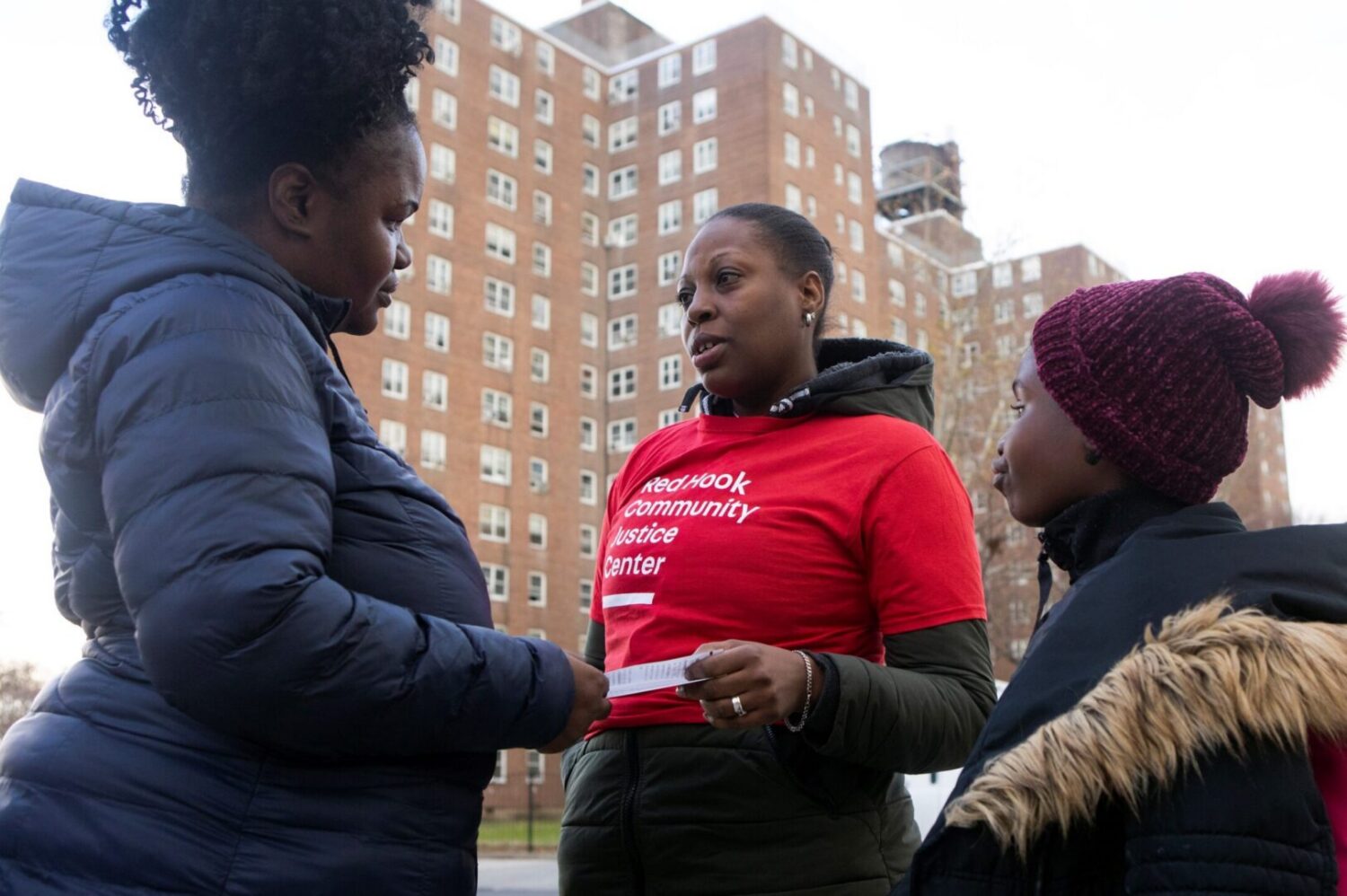
Housing provides the foundation for stability, allowing individuals to focus on education, employment, and family health, rather than survival. It fosters stronger, more connected communities where residents can thrive and support each other. Investing in housing solutions prevents displacement, reduces crime, and creates safer neighborhoods. Housing is also essential for breaking the cycle of incarceration. People are often unable to participate in justice reform initiatives because they are homeless; and without stable housing, individuals leaving the justice system face significant barriers to rebuilding their lives. In short, stable housing is necessary for individuals, families, and neighborhoods to thrive.
As an organization with the mission of advancing community justice and justice system reform, housing stability is a core component of the Center’s work.
We work across the country to break down the silos between housing and justice initiatives. Working with housing and criminal justice policymakers, we support the development of coordinated solutions that prioritize access to housing as a key component of justice-reform efforts.
By working together, housing and criminal justice agencies can build a more effective, supportive approach that helps individuals and communities flourish.
The 2025 Housing Justice Peer Network is a free, virtual, 16-month opportunity for communities interested in disrupting the relationship between housing instability and the criminal justice system by removing barriers to housing and improving or expanding access to housing for justice-involved people. The Center for Justice Innovation is partnering with the Housing Solutions Lab at the NYU Furman Center to provide peer learning opportunities, technical assistance, and policy guidance to participating agencies.
If you have additional questions, please contact Jess Wunsch (jess.wunsch@nyu.edu) and Jessica Yager (jyager@innovatingjustice.org).
In 2024, we hosted a webinar for individuals and teams interested in learning more about the Network opportunity, covering an overview of the Network highlighting some of the Lab and the Center's recent work on housing and criminal justice. In addition, we led a Q&A session with the organizers of the Housing Justice Peer Network.
This report, created in collaboration with the Housing Solutions Lab at New York University’s Furman Center, explores ways that actors in the justice system and housing agencies can partner to break this harmful cycle. Through a national survey and 32 individual interviews with practitioners in diverse places, as well as a scan of over 50 programs, the paper compiles innovative policies and programs that exist to bring more safe, stable housing to people at various stages of legal system involvement. The report recognizes that cross-system collaborations are hard and also explores the elements that made these partnerships successful. The report finds that in diverse places across the country, housing and justice system practitioners are working together to design solutions.
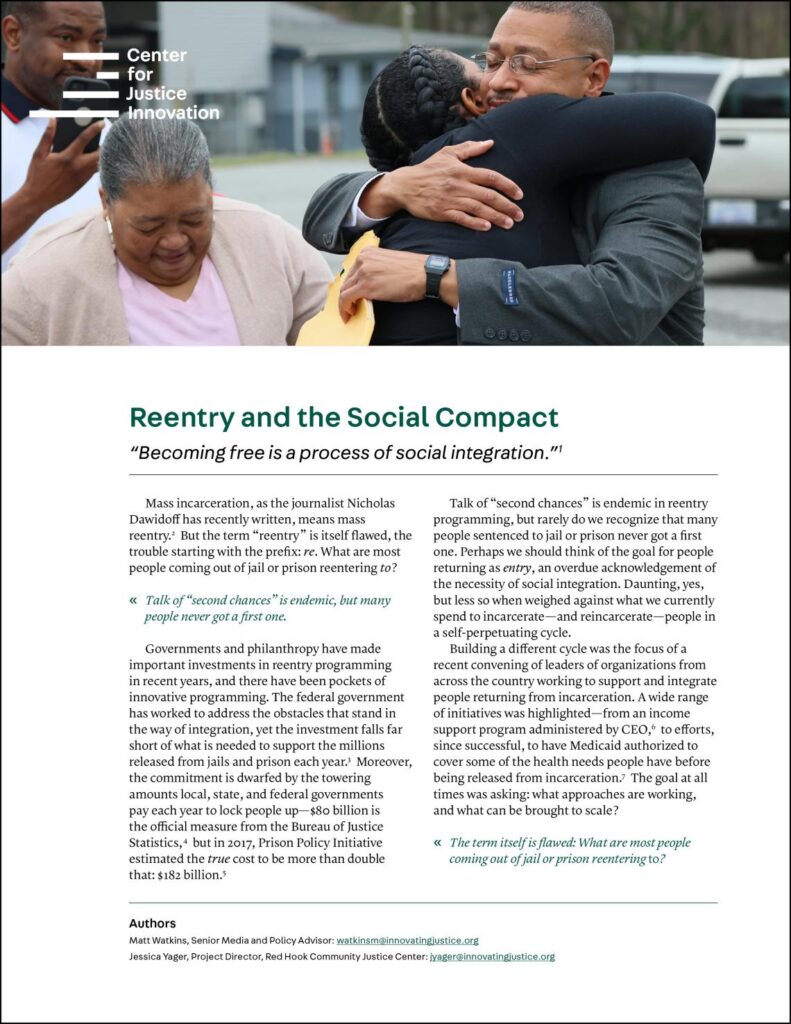
Mass incarceration means mass reentry. But the term “reentry” is itself flawed: What are most people coming out of jail or prison reentering to? We talk of “second chances,” but rarely do we recognize that many of the millions of people returning from jail and prison each year never got a first one. Perhaps we should think of the goal for people returning as entry, an overdue acknowledgement of the necessity of social integration.
This policy brief outlines a new vision for reentry focused on the social integration due to returning citizens. That starts with two priorities: immediate access to housing and to trauma-informed therapy.
Along with partners, the Center hosted a session on the challenges returning citizens face in the housing market at the 2024 National Conference on Ending Homelessness in Washington D.C., organized by the National Alliance to End Homelessness.

The Center convened the Innovations in Reentry and Reintegration Roundtable in Washington, D.C., in March 2023.
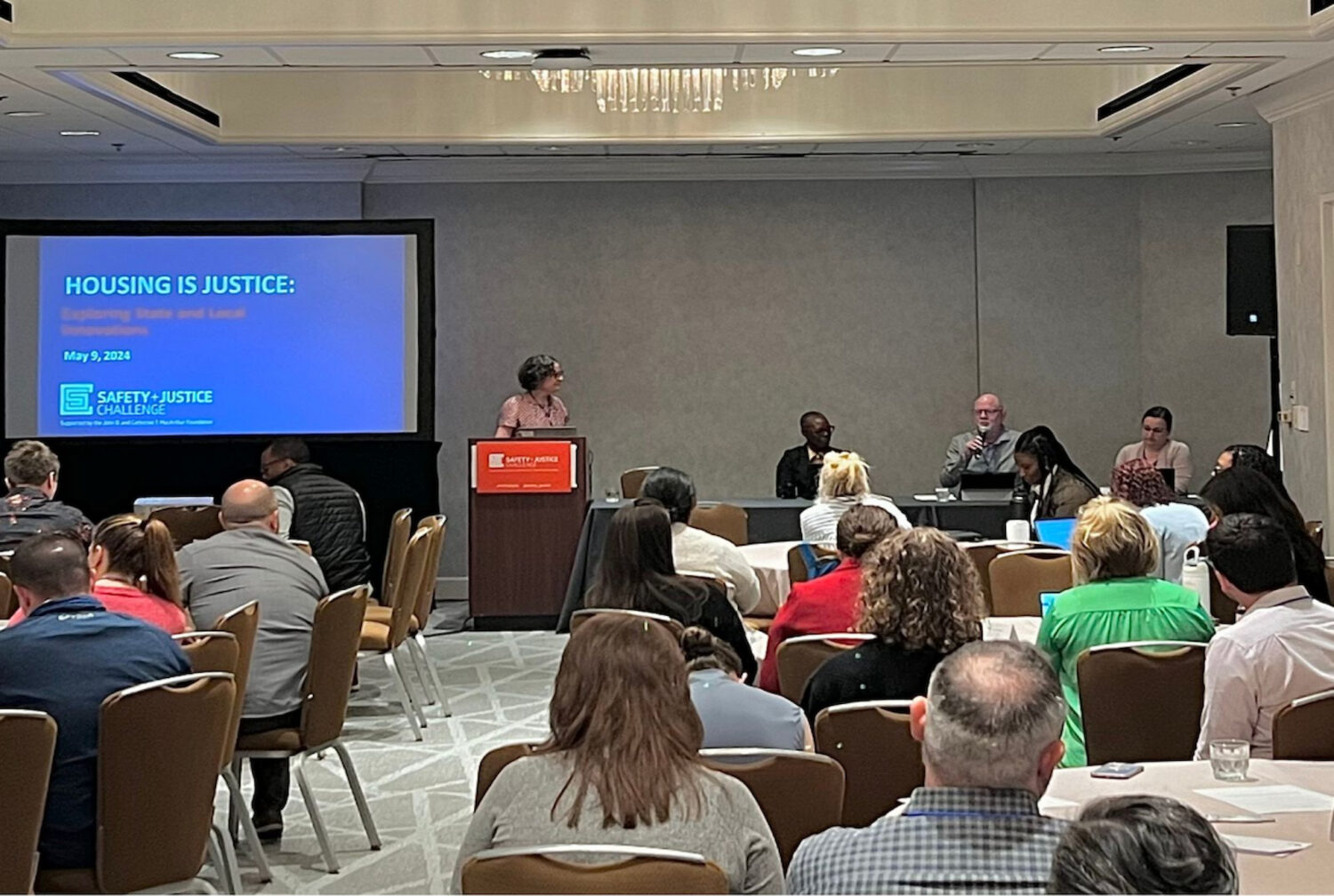
The Center partnered with the Urban Institute to organize and facilitate a session exploring housing solutions for justice involved people at the Safety and Justice Challenge convening in Houston, Texas, in May 2024.