Poor housing conditions affect millions of people across the country, but there are ways to support families with getting the repairs they need.
This holiday season, as families across the country gather in their homes to put up festive lights, share warm meals, and escape the cold weather, thousands of others are left without electricity, gas, or heat.
When we think about the housing crisis, we often think of skyrocketing rents, evictions, and homelessness. All of those are urgent issues that demand our attention. But there’s another symptom of this crisis that’s often missing from the discussion: the millions of people facing unlivable and dangerous conditions at home.
Poor housing conditions pose serious health risks. Heat and electricity outages leave people vulnerable to extreme temperatures in both winter and summer. Dysfunctional elevators prevent people with mobility issues from getting to and from their homes and meeting basic needs. Leaks, mold, and pests can cause or exacerbate health conditions like asthma.
These issues weigh most heavily on low-income families and communities of color, who are already more likely to experience chronic health issues due to disparities in access to healthcare and neighborhood conditions.
These are complex problems that call for systemic responses. But as our programs on the ground show, there are innovative ways to support families with getting the repairs they need to live in safe, healthy homes.
Empowering Tenants in Housing Court
For the half a million New Yorkers living in public housing, utility outages and unsafe conditions are all too common. Outages can drag on for months, leaving people without basic necessities like heat and electricity. Collectively, NYCHA’s buildings stand in need of roughly $78 billion in repairs.
Our Harlem and Red Hook Community Justice Centers are beacons of support for families dealing with these issues. Home to community-based housing courts with on-site resource centers, tenants can come in to file cases against their landlords and assert their rights to safe, stable housing with help from our staff. That’s especially crucial for public housing residents, who need to file a housing court action to receive a city inspection for long-overdue repairs.
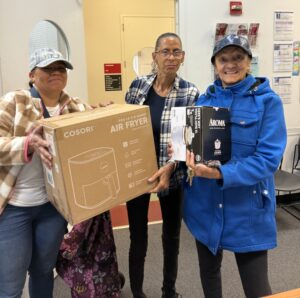
Our housing resource centers also provide hands-on support for residents with urgent needs. This year, our Red Hook team provided free air fryers and rice cookers to NYCHA households facing gas outages. That decision came from direct outreach with the community to determine what resources would be most helpful.
In Harlem, our staff also help operate the Virtual Court Access Network to increase access to housing justice. Instead of a lengthy commute, residents can go to our housing resource center in their community to initiate actions for home repairs virtually.
Addressing Power Imbalances
Many tenants facing unsafe living conditions choose to withhold rent in order to get repairs made. But this, in turn, can put them in danger of eviction.
In New Jersey, tenants can point to habitability issues in order to defend themselves against eviction in housing court. To do that, they have to present the full amount of rent withheld to the court. But many residents can’t pay in full, preventing them from pushing back against eviction despite serious health and safety concerns.
Our recently launched Healthy Homes Bond Fund aims to address those power imbalances in landlord-tenant court. The program offers relief for overdue rent in cases involving unsafe conditions, preventing evictions and helping tenants get repairs. Case managers can also help residents with documenting their concerns, navigating code enforcement, and accessing vital community-based resources.
Our Eviction Diversion Initiative takes a similar approach in Brooklyn Housing Court. The program empowers tenants facing eviction to raise habitability concerns in non-payment cases. More than 31 percent of tenants supported by the program cite uninhabitable conditions like leaks, mold, and pests. It also helps them file their own housing court cases against their landlords. On top of preventing evictions for up to 80 percent of the households they work with, our team makes sure tenants find their homes in good repair.
“We find most people don’t know their rights to certain housing standards,” says Court Navigator Luca Seixas Wedmore. “They have the misconception that if they’ve been brought to court by their landlord, now is not the time to bring up things that need to be fixed in their apartment. We work to make sure they know housing court can help them get repairs, as housing law is meant to serve tenants and landlords alike.”
Repairing Communication and Trust
Another model for change can be seen in our Community Ambassadors program in Syracuse, New York. Our outreach teams work to keep people in safe, stable homes by facilitating communication between residents, landlords, and city agencies.
Community Ambassadors help tenants struggling with unsafe living conditions reach out to city code enforcement to get necessary repairs made. Amid breakdowns in trust and communication between landlords and tenants, they serve as third parties and bridge-builders to address health and safety concerns.
The program is staffed in large part by people who are from the communities they serve. That creates a deeper sense of trust for residents, who often feel wary of seeking help from more impersonal agencies.
Every family deserves to live in a safe, decent home, not just during the holidays but all year round. In New York and beyond, our teams are building bridges and increasing access to justice to make that a reality for everyone.