Skip to Content
Reflecting on our legacy and discovering what's next

30 Years of the Center for Justice Innovation

Since we planted our roots in the 1990s, the Center for Justice Innovation has envisioned, built, and shared innovative solutions for community safety. From starting the nation’s first community court to bringing community-based violence prevention to all five boroughs of NYC, our work focuses on one goal: bringing everyone to the table to build safe and strong communities.

Our Story

1991

What If There Was a Different Way? Planting the Seeds of Justice in Midtown Manhattan

In the early 1990s, drug sales, car break-ins, and illegal sex work were a part of daily life in and around Times Square. The same small group of people rotated in and out of court every day, an endless cycle of despair both for them and the broader Midtown community.

Leaders in the New York State court system knew there must be a better way. In partnership with the Fund for the City of New York, the New York City government, and Times Square Alliance—and fueled by the insights of countless community residents, small business owners, government agencies, and non-profit groups—they began to imagine a new kind of court, one that addresses the root causes of crime and not just its effects. Key leaders in that effort included Judge Jonathan Lippman, Judge Judith S. Kaye, Robert G.M. Keating, Herb Sturz, Greg Berman, and Midtown’s founding director John Feinblatt.

The people who came to the Midtown court “did not have complicated legal cases, but they did have complicated lives.
— John Feinblatt
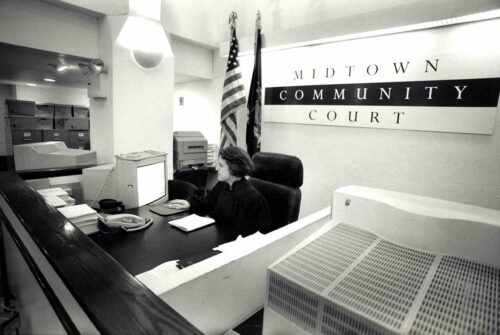
Black and white image of judge sitting on the stand on the computer with Midtown Community Court in the background

1993

The First Community Court in the Nation

The Midtown Community Court, the nation’s first community court, opens its doors. Its mission: reduce incarceration, improve safety, and connect people charged with crimes to meaningful services. Just 18 months after the court opened, arrests were down—including a 56% reduction in arrests for sex work. Police and community members noted a visible reduction in street activity, like unlicensed vending and graffiti.

1995

On the Cutting Edge

The Midtown Community Court isn’t only reimagining how courts can better support community safety, but also how the court itself does its work. Midtown’s cutting-edge, in-court computer technology takes the top prize for public sector innovation at Microsoft’s Windows World Open 1995. The technology will later be featured in the Innovation Collection at the Smithsonian’s National Museum of American History.


1996

Piloting Innovation in New York

As the independent research and development arm for the courts, the Center pilots and evaluates innovative programming in the court system through specialized problem-solving courts, off-ramps from the system, supportive services for people, and new ways to achieve public safety. Within a year, the Center receives an Innovations in American Government Award from the Harvard Kennedy School of Government, the Ford Foundation and the Council for Excellence in Government.


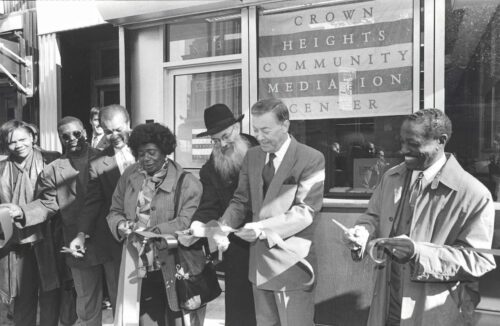
Group of people cutting the ribbon for the opening of Crown Heights Community Mediation Center.

1997

Preventing Violence in Community

  • To offer community members a neutral space to resolve disputes, the Center launches the Crown Heights Community Mediation Center in Brooklyn. Today it is known as Neighbors in Action, serving the community with a range of services from violence intervention to workforce development. 
  • Following the tragic shooting of a beloved school principal, community planning sessions begin for the Red Hook Community Justice Center in Brooklyn. Mayor Rudy Giuliani attends the official ground-breaking ceremony in June 1998.


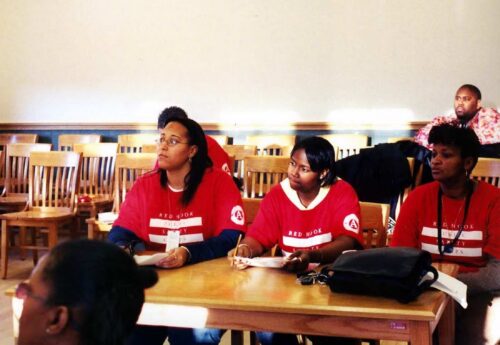
Group of e women sitting at a table in the Red Hook Community Justice Center court room with red shirts on.

2000

Services for All Your Needs

The Red Hook Community Justice Center opens as the nation’s first multi-jurisdictional community court, combining many different kinds of cases—criminal, housing, and family—in a single courtroom before a single judge to address all open cases and underlying needs in one place. The Justice Center offers supportive services for people involved in the justice system, tenants facing housing challenges, and young people as they develop skills to be future leaders.

2002

Specialized Courts Gain Traction

  • To provide treatment-based alternatives to incarceration for people with mental illness, the Center opens the Brooklyn Mental Health Court.
  • The Center is named one of the top 15 innovations in the history of the Innovations in American Government Award for field-testing new, more efficient and responsive ways of organizing courts.

2005

Problem Solving for a New Generation

The Center pilots a ground-breaking law school curriculum on problem-solving justice at Fordham Law School, seeding change for future generations of lawyers.

2007-2008

New Court Models Spread Across the Country

Problem-solving courts begin to open across New York and the country as the Center shares lessons learned and helps other jurisdictions launch their own solutions.

The National Association of Drug Court Professionals honors the Center for Court Innovation, Chief Judge Judith S. Kaye, and the New York State Association of Drug Treatment Court Professionals with its National Leadership Award in recognition of New York’s efforts to “go to scale” with drug courts.

In partnership with the New York State Unified Court System, the Center develops the Manhattan Integrated Domestic Violence Court and the state’s first domestic violence family court in Queens. With the Center’s expert assistance, the community court model spreads in San Francisco, New Orleans, and Newark, and internationally in jurisdictions like Scotland, South Africa, Australia, Ireland, China, Canada, and the Republic of Georgia.

2010

Learning from Each Other

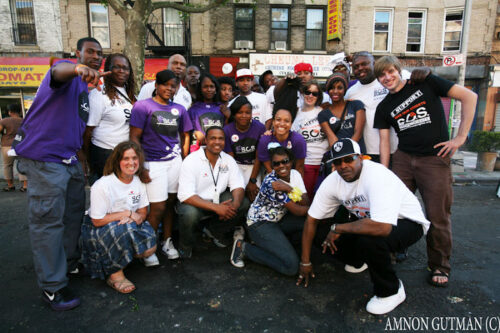
  • The Center launches New York City’s first violence interruption program with Save Our Streets (S.O.S.), a community-based effort to end gun violence, adapting the Chicago CeaseFire model to Brooklyn.
  • The Center organizes the first-ever international conference of community courts in Dallas, Texas, to help reformers around the world share ideas and learn from each other.

2012

Incorporating Restorative Practices

Inspired by indigenous practices, the Red Hook Community Justice Center launches its Peacemaking program bringing together community volunteers, family members, and the person who caused harm to discuss what happened and find a path forward.

2013

Pilot, Scale, Less Jail

New York State Chief Judge Jonathan Lippman asks the Center to test the feasibility of a supervised release program, which would offer community-based supervision instead of bail and incarceration for people awaiting trial. The Center creates Brooklyn Justice Initiatives to serve people facing the possibility of bail they cannot afford. Today, the supervised release program operates in all five boroughs, significantly reducing pre-trial detention.

2015

Families Need Strong Starts

To better support children and families involved in abuse and neglect cases in the New York City Family Court, the Center launches the Strong Starts Court Initiative, a science-informed approach to early psychology and child development. Today, Strong Starts operates across New York City as well as in Westchester and Erie County.

2016

Running Point to Close Jails on Rikers Island

The Center begins supporting the work of the Independent Commission on New York City Criminal Justice and Incarceration Reform (also known as the Lippman Commission), charged with studying the jail system with an eye toward facilitating the closure of Rikers Island. The Center coordinates a multi-agency team, overseeing research, planning, and community engagement.

2017

Spreading Community Justice

  • With our support, 10 jurisdictions launch new or enhanced community courts, scaling community justice throughout cities across the country: Cleveland, OH; Cook County, IL; Dallas, TX; Eugene, OR.; Honolulu, HI; Jersey City, NJ; Las Vegas, NV; Philadelphia, PA; and Spokane and Olympia, WA.
  • The Center helps launch Fair and Just Prosecution, a national network that brings together newly elected local prosecutors to promote a justice system grounded in fairness, equity, compassion, and fiscal responsibility.


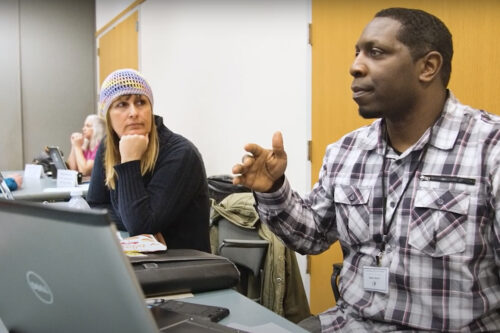
staff speaking to client

2018

Building Specialized Responses

  • Launching the Overdose Avoidance and Recovery Court was a first in New York City, offering treatment and services instead of incarceration for people at risk of an overdose. Our Bronx Community Solutions program worked with the Bronx District Attorney’s Office and the New York Court System to launch the program.
  • New York City’s Supervised Release Program, which the Center piloted and helps operate, was recognized as one of Harvard University’s 2018 Innovations in American Government Award Top 25 Programs. The Center for Court Innovation was previously honored with this award in 2002 and 1998.


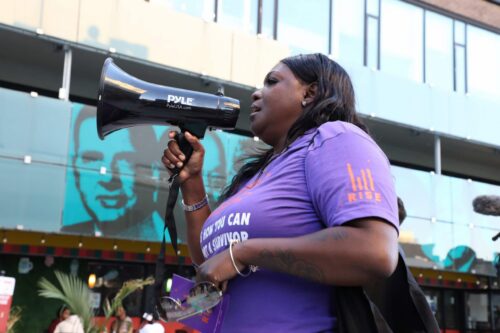
Woman in a purple RISE t-shirt speaks into a megaphone.

2019

Addressing Violent Crimes

  • Supported by the Center’s Manhattan Justice Opportunities program, the Manhattan Felony Alternative-to-Incarceration Court is one of the first in the U.S. to offer community-based alternatives to incarceration in all kinds of felony cases.
  • The Center’s newly launched RISE Project works to address the intersection of gun violence and intimate partner violence by creating opportunities for healing, safety, and accountability.


2020

Something Something

  • The Center helps New York City release nearly 300 people at risk of contracting COVID-19 from jail, allowing them to finish their sentences through supervision and services in the community.
  • To better understand why young New Yorkers carry guns, the Center relies on field researchers with street experience to interview more than 300 young people for a groundbreaking study, “Gotta Make Your Own Heaven”: Guns, Safety and the Edge of Adulthood in New York City.
  • The Center created “From Defendant to Survivor: How Courts are Responding to Human Trafficking,” a short film that was awarded Best Documentary in the Orlando Human Trafficking Awareness Film Festival. Watch the full film.

2021

Sharing Survivor-Centered Resources

The Center launches DV RISC (Domestic Violence Resource for Increasing Safety and Connection), a survivor-centered initiative that provides resources and support for those working to reduce and prevent homicide in intimate partner cases.

2023

New Name, Same Goal

  • The Center changes its name to the Center for Justice Innovation to better reflect the reality of justice, which extends beyond courts and the justice system to the communities most impacted by crime and disinvestment.
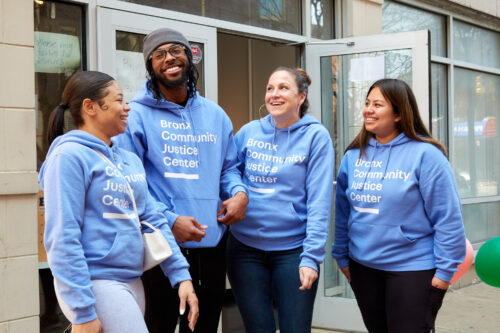
  • With the opening of the Bronx Community Justice Center, the Center has now launched Community Justice Centers in all five boroughs of New York City.


2024

Celebrating Literature Inside Prisons

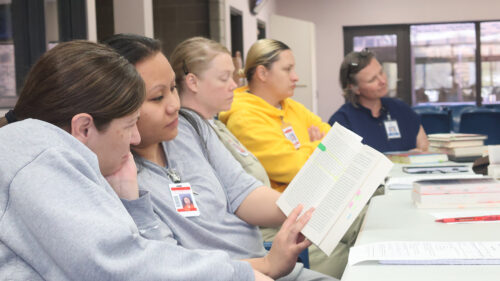
The Inside Literary Prize—a collaboration between the Center, Freedom Reads, the National Book Foundation, and bookstore owner Lori Feathers—launches as the nation’s first book award judged exclusively by people in prison.

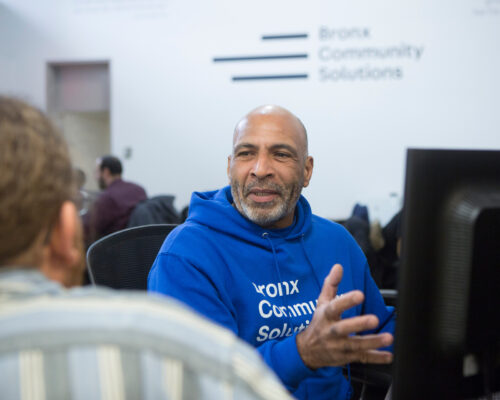
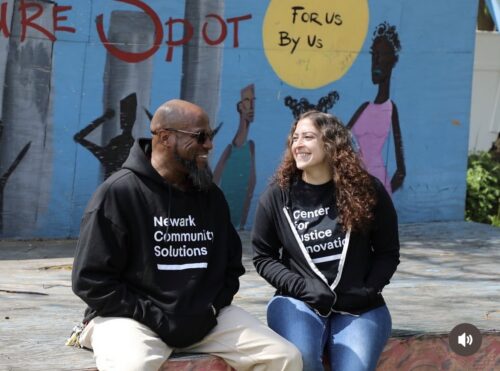
2 staff members sit smiling in conversation

2025

Innovation from Within

To invest in new ideas, the Center creates the Innovation Fund, which provides seed funding for creative initiatives crafted by Center staff. Awardees are selected in a competitive, supportive decision-making process.

2026

Pushing the Field Forward

  • The AI and Justice Consortium launches, co-founded by the Center bringing justice practitioners, tech leaders, and communities together to leverage opportunities and mitigate risks of artificial intelligence in the justice system.
  • Community Justice Solutions—comprising an experienced team of problem-solvers—launches as a new national venture to help communities across the country advance safety and justice.