Together, we can change the default setting on the justice system.
Community Justice Solutions can help.
Together, we can change the default setting on the justice system.
Community Justice Solutions can help.
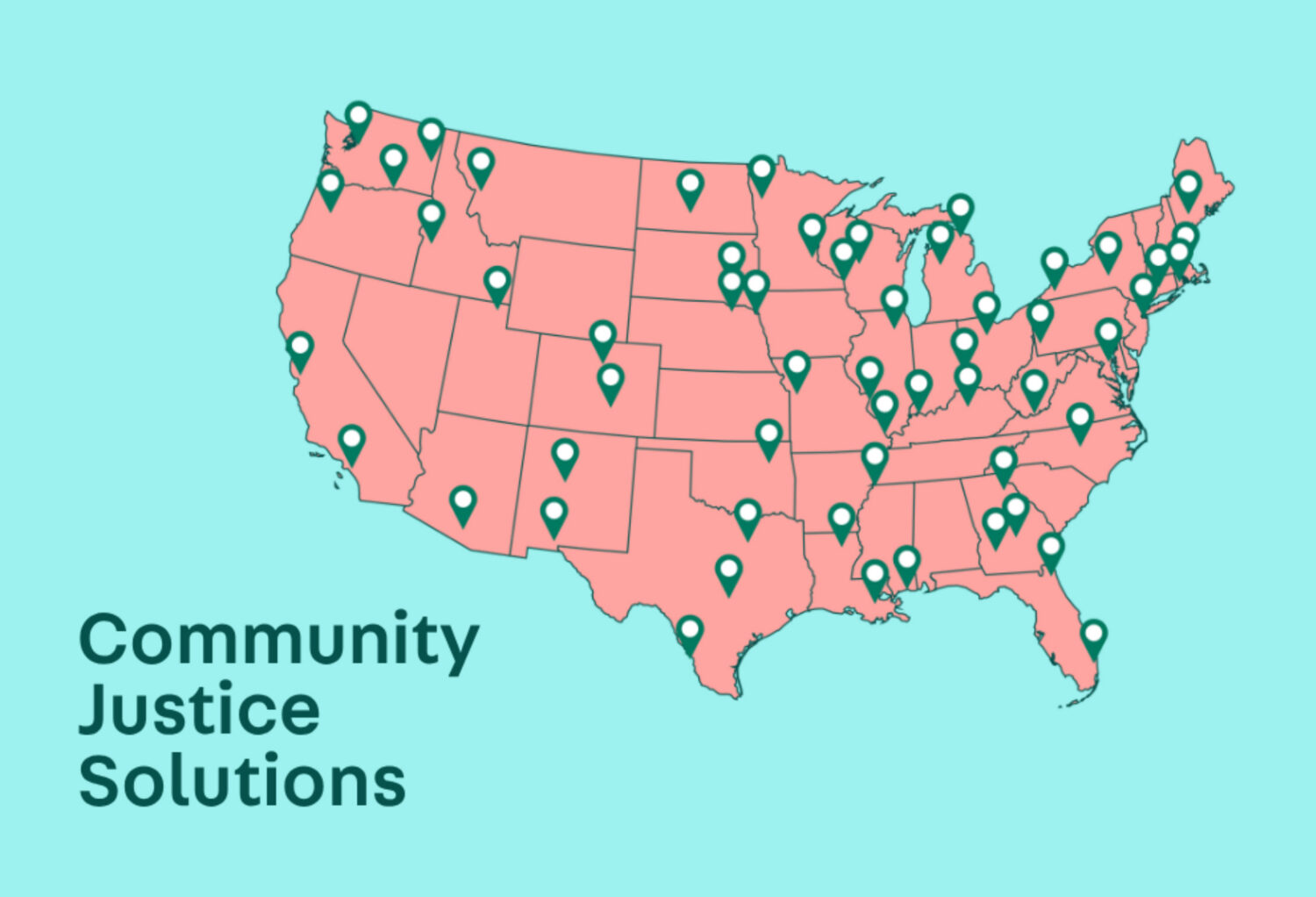
Public safety is built on vibrant, flourishing communities. The Center for Justice Innovation knows how to build new pathways to safety and justice. At Community Justice Solutions, we work with communities—big and small, rural and urban—to design holistic, effective, and data-driven ways to respond to and prevent crime and violence.
Drawing on our three decades of field-leading research and on-the-ground implementation in all 50 states, Community Justice Solutions is ready to help you identify challenges and opportunities across the full spectrum of the justice system.
Speak to Experts in Community JusticeCommunity Justice Solutions is led by experienced problem-solvers. We bring the right people together, bridging the gaps between communities, courts, governments, and local leaders. No two places are alike, so what worked in Portland, Oregon, may not work in Portland, Maine. We don’t offer a one-size-fits-all solution. We work with you to create solutions that work for your community.
The Center has partnered with courts and communities to pilot and scale new approaches since 1993, launching the nation’s first community court and creating programs that have now expanded to include work like alternatives to bail, alternatives to incarceration, restorative justice programs, and placekeeping that builds neighborhood safety from the ground up.
We work with communities on a range of issues, including:

At the Center for Justice Innovation, our process is unique. The court- and community-based work of our 30 on-the-ground programs in New York and New Jersey directly inform the work of Community Justice Solutions, and the conversations and recommendations we make to our partners. We help identify goals and define success, while building long-term capacity for data-driven policy and practice.
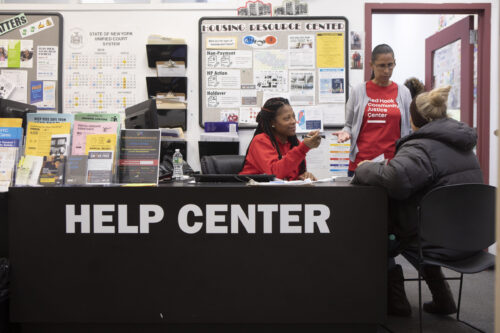


Community Justice Solutions works at the intersections of systems. People who are homeless are far more likely to be arrested and to experience worse outcomes in the criminal legal system. This only deepens their struggles with shelter. Our new policy brief focuses on frameworks for stopping that cycle. Housing experts are available to help bring these solutions to your community.
Collecting and analyzing data is core to our approach with any partner or project. Our in-house researchers help translate findings to help system leaders understand complex problems. We help you build long-term capacity for data-driven policy and practice with tailored recommendations and hands-on support.
Engaging people who cause harm through intimate partner violence is critical to survivor safety. The roots of such violence are many, and Community Justice Solutions has developed multiple pathways to healing and accountability. In Cuyahoga County, Ohio, we’ve piloted the Parenting After Violence program to work with fathers who have caused violence. The curriculum was developed along with national experts and local practitioners. Parenting and intimate partner violence don’t happen in isolation; our program focuses on long-term family safety.