During difficult times, the communities and systems we serve need our work more than ever. That was certainly true in 2025, when communities in New York and across the country faced unprecedented challenges, from federal funding cuts to ongoing post-pandemic public safety issues.
The Center stepped up like never before this year—developing and running innovative programs that reduce crime and incarceration and build stronger communities; conducting original research to identify policies and programs that work; and sharing what we learn with hundreds of communities and thousands of practitioners around the nation.
We believe communities are at the heart of delivering justice and safety and that communities and systems must work together to improve lives. By reforming systems and co-creating solutions alongside communities, we’ve continued to build safety and opportunity everywhere we go.
We call that approach “Community Justice,” and we measure our success in safer communities, healthier families, and a justice system that heals rather than harms. Community Justice is critical to building evidence-based solutions that restore trust between systems and the people they serve—a trust that is needed now more than ever.
Throughout our 2025 Impact Report, every milestone, every stat, and every photo represents real people working to build a better tomorrow.
Together, we can accomplish anything. Thank you for your support and I hope you will continue to stand with us in the vital work of Community Justice.
Best,
Courtney Bryan
Chief Executive Officer, Center for Justice Innovation
Building Bridges to Safety and Justice
For 30 years, the Center for Justice Innovation has worked to transform the justice system and build safer, stronger neighborhoods. Guided by our vision of community justice, we bring systems and communities together to solve local problems by:
Developing innovative programs in courts and communities
Conducting original research to understand issues and craft solutions
Sharing what we learn to strengthen safety and justice across the country
Read on to learn more about some of the ways we’ve built bridges and planted the seeds of safety and justice across the country in 2025.
We reach thousands of people every year with compassionate, data-driven solutions that reduce incarceration, make our communities safer, and help people lead stable lives.
Since our founding, we've had...
366,000+
alternative-to-incarceration cases in New York and New Jersey where we provided services, putting people on a path to a stronger future
49,700+
encounters helping residents with housing needs in New York and New Jersey to ensure families can live in safe, stable homes
50
states where our experts have helped communities implement new ways of building safety and justice
In all of our work, we build bridges among government, communities, service providers, and people most impacted by crime and the justice system. Our longstanding partnerships in courts and communities allow us to foster understanding and trust between systems and those they’re meant to serve.
In 2025, we had...
36,400+
cases where we provided supportive services to people at our court and community-based programs
42,400+
total attendance at our community events
230+
organizations and jurisdictions receiving guidance and support from us across the country
Read on to learn more about some of the ways we’ve built bridges and planted the seeds of safety and justice across the country in 2025.
*All data pertain to Fiscal Year 2025.
Innovation on the Ground
Delivering Pretrial Justice in the Neighborhood
As a provider of NYC’s Supervised Release program in Brooklyn and Staten Island, we help keep people out of jail and the community safe by connecting people to community-based support while their court case is pending. Our new location in the East New York neighborhood of Brooklyn is powered by staff from the community and transforms that model by bringing services to a neighborhood where many participants struggle to access support. Instead of traveling downtown—often an hour or more away by bus or subway—participants can meet their court requirements close to where they live and work while accessing services for employment, housing, and other needs.
700+
participants served at the new office in its first six months
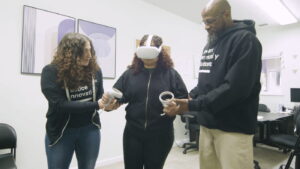
Our Newark team’s Virtual Reality Adventure Therapy proposal offers an immersive, more accessible alternative to traditional therapies. Watch this video to learn more.
Our staff has always been at the forefront of our mission to build innovative solutions to local challenges. That’s why we invited our staff who work with community members every day to pitch their own ideas to meet the needs of the communities they serve. In the first year of our Innovation Fund, we invested $25,000 and $225,000 in seed funding for two ideas with the potential to spark system change—Virtual Reality therapy to increase access to support for young people dealing with trauma, and an eviction relief initiative for tenants with repair needs that will inform housing policies nationwide.
Activating Men in the Fight Against Gender Violence
Gun violence and gender-based violence are intertwined, but efforts to address them too often operate in silos. Our new Men Rising Initiative bridges that gap, mobilizing men in anti-gun violence programs to prevent gender-based violence. The program builds on our years of work developing community-driven responses to gun violence and intimate partner violence across New York City.
“This is amazing to try to break down the silos, because we know that violence is violence—the trauma is the same, what causes it is the same. We also know that carceral solutions have not actually stopped the violence, so finding a way that’s based in dealing with the trauma that’s causing it will be so much better to prevent further harm.”
— NYC Public Advocate JUMAANE D. WILLIAMS at our launch event for the Men Rising Initiative
Reengineering Systems
Empowering Communities to Drive Investments
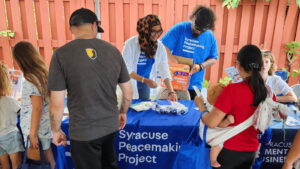
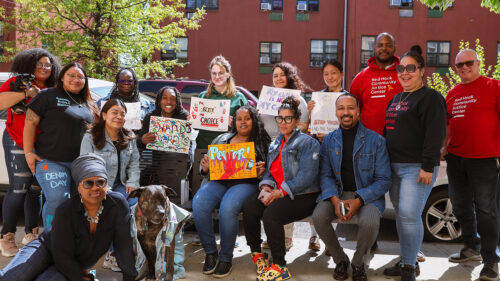
Too often, communities struggle to make their voices heard in policies and decisions that directly impact them. Our Neighborhood Safety Initiatives team engaged public housing residents across New York City to determine what investments in their developments would look like, totaling $550,000 towards community-led policies. After we helped convene residents, policymakers, and community leaders to shape policy recommendations, more than 5,500 New Yorkers voted on their priorities—from renovating playgrounds and painting murals to investing in on-site career services for young people.
Reimagining Family Justice Statewide
Many people in family court are struggling with deep-rooted challenges like poverty, housing insecurity, and trauma. In partnership with New York State’s court system, the Governor’s Office, and Chief Judge Rowan D. Wilson, we helped launch the Family Justice Initiative to transform how family courts across the state respond to those needs. The Initiative brings together everyone—judges, attorneys, clinicians, and families impacted by the system—to develop a comprehensive plan to reduce system involvement, break generational cycles of harm, and help parents and children thrive.
“In the court process, it’s like you’re just a number. So it’s just a nice breath of fresh air to deal with someone one on one who really cares.”
— ALAN, participant in our Parent Support Program
The jails on Rikers Island are dangerous and inhumane, and every day they remain open puts incarcerated people and jail staff at risk. Our CEO Courtney Bryan serves on the Independent Rikers Commission, which released a new roadmap for safely reducing the city’s jail population and closing Rikers Island for good. The recommendations include proven solutions that we’ve built over decades—from prioritizing care over incarceration for people with serious mental health needs, to expanding Supervised Release. The report also informed new citywide reforms to reduce case delays and assess people for alternatives to incarceration.
10,700+
Supervised Release participants we served in 2025 as an alternative to bail and pretrial detention
Paving the Road to Community Justice Nationwide
Uplifting the Voices of Incarcerated Readers
In partnership with Freedom Reads and the National Book Foundation, we helped sponsor the 2nd annual Inside Literary Prize. The only major US book award judged by incarcerated people, the Inside Literary Prize builds connections and celebrates our shared humanity. Last year, more than 300 incarcerated judges across 15 facilities awarded the prize to Nana Kwame Adjei-Brenyah’s Chain-Gang All-Stars after months of reading and deliberation.
“Being a judge for this prize means that, in this moment, I’m not just an incarcerated person, I’m a reader—that what I do is of value, and that my time has meaning.”
— ANTOINETTE, judge for the 2025 Inside Literary Prize at the Edna Mahan Correctional Facility, Hunterdon County, New Jersey
"Books Take Me Outside This Place" | 2025 Inside Literary Prize
Misdemeanors make up roughly 80 percent of all criminal cases. Local municipal courts handle millions of these cases and collect over $2 billion in fines and fees each year, but they’re often overlooked as places for change. We convened a national conversation of 200 experts from more than 20 states to explore how these courts can find innovative ways to meet community needs and reduce system involvement. This work builds on our experience transforming responses to minor offenses, including our recent report A Moment for Misdemeanor Policy Change on implementing effective misdemeanor reform.
Building Housing Justice Across the Country
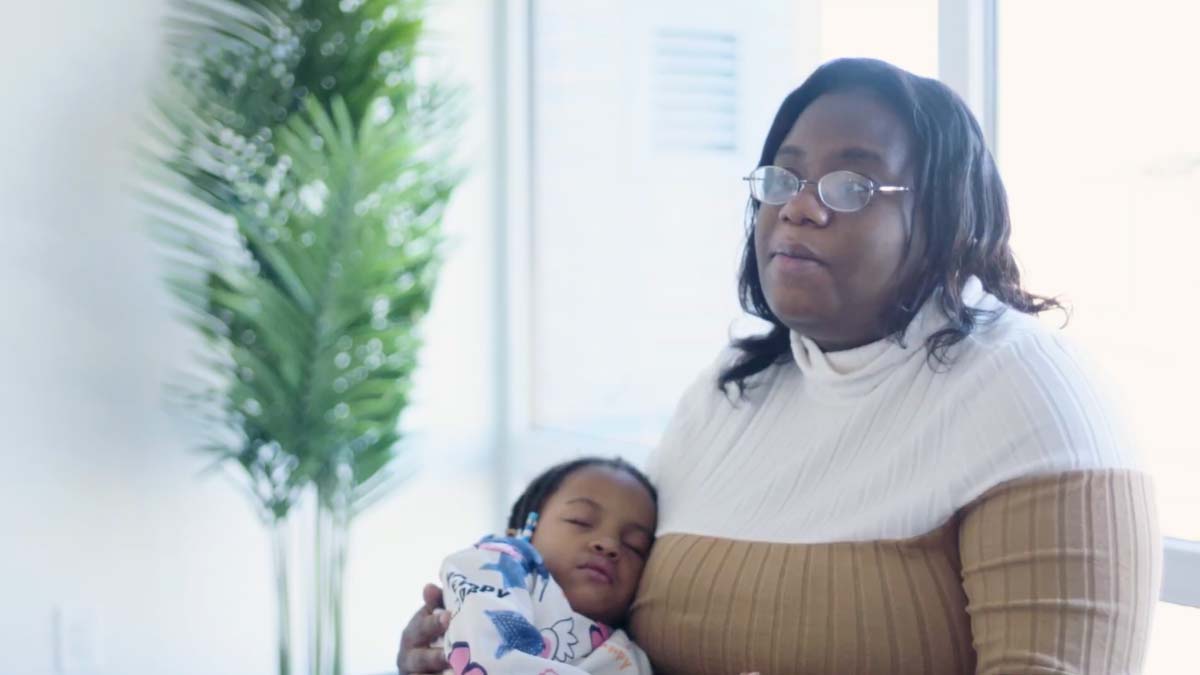
Snapshot | When Celia, a single mother, called our Upstate New York outreach team, black mold in her apartment was triggering her three-year-old daughter’s asthma. Our team helped her get through to building management, arranged for a temporary living space while repairs were made, and helped her assert her family’s right to a safe, healthy home.
We’ve supported policymakers in eight cities and counties with creating action plans to increase access to safe, stable housing for people impacted by the justice system. In partnership with the NYU Furman Center’s Housing Solutions Lab, the Housing Justice Peer Network helps communities across the country learn from each other’s efforts to address cycles of housing insecurity and justice involvement. The project builds on our decades of work bringing government and communities together to prevent evictions, empower tenants, and build housing justice.
Expanding the Horizons of Justice
Minding the Machines
Artificial Intelligence is working its way into nearly every industry and sector in American life—and the criminal justice system is no exception. In such a high-stakes setting, it’s crucial to think up front about exactly how, when, why, or even if Artificial Intelligence should be used. Our policy brief, A Line in the Sand: Artificial Intelligence and Human Liberty, makes an urgent plea for field-wide standards to both safeguard and enable AI implementation with concern for the dignity of everyone in the justice system.
The Do’s and Don’ts of AI in the Criminal Justice System
Jan 13, 2026
Envisioning Community Justice Centers as the Future
New York State’s Chief Judge Rowan D. Wilson is a vocal and committed advocate for our community justice approach. In his New York Law Journal piece entitled “Reanimating Community Life Through Community Justice Centers,” Judge Wilson laid out a vision for reimaging how communities can build connections and solutions through community justice centers.
“The erosion of community, a decline in interpersonal interactions, and general civic detachment again pose a threat to American democracy. Because today’s challenges echo yesterday’s, history also points the way forward: invest in institutions and spaces that reanimate community life.”
— New York State Chief Judge ROWAN D. WILSON
Bringing Restorative Justice to Broadway
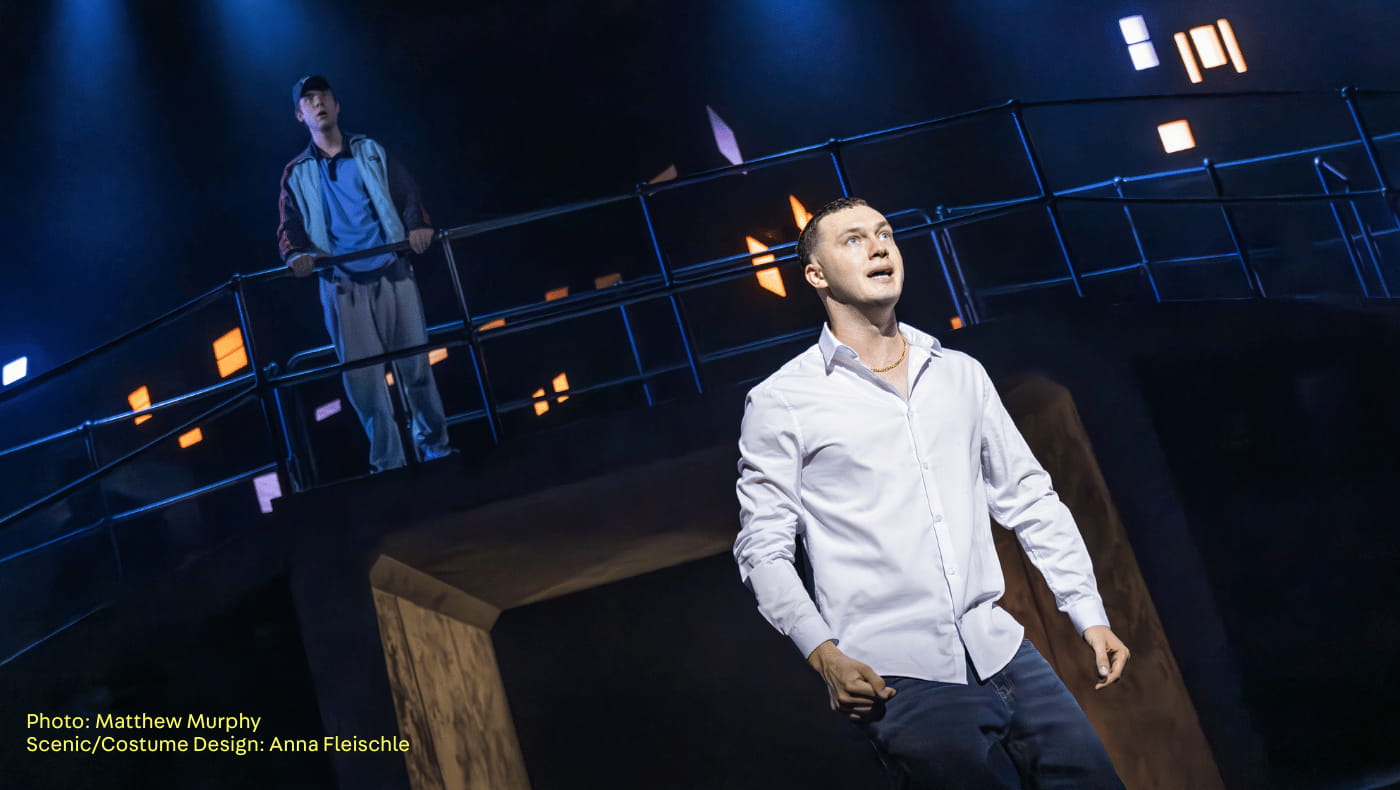
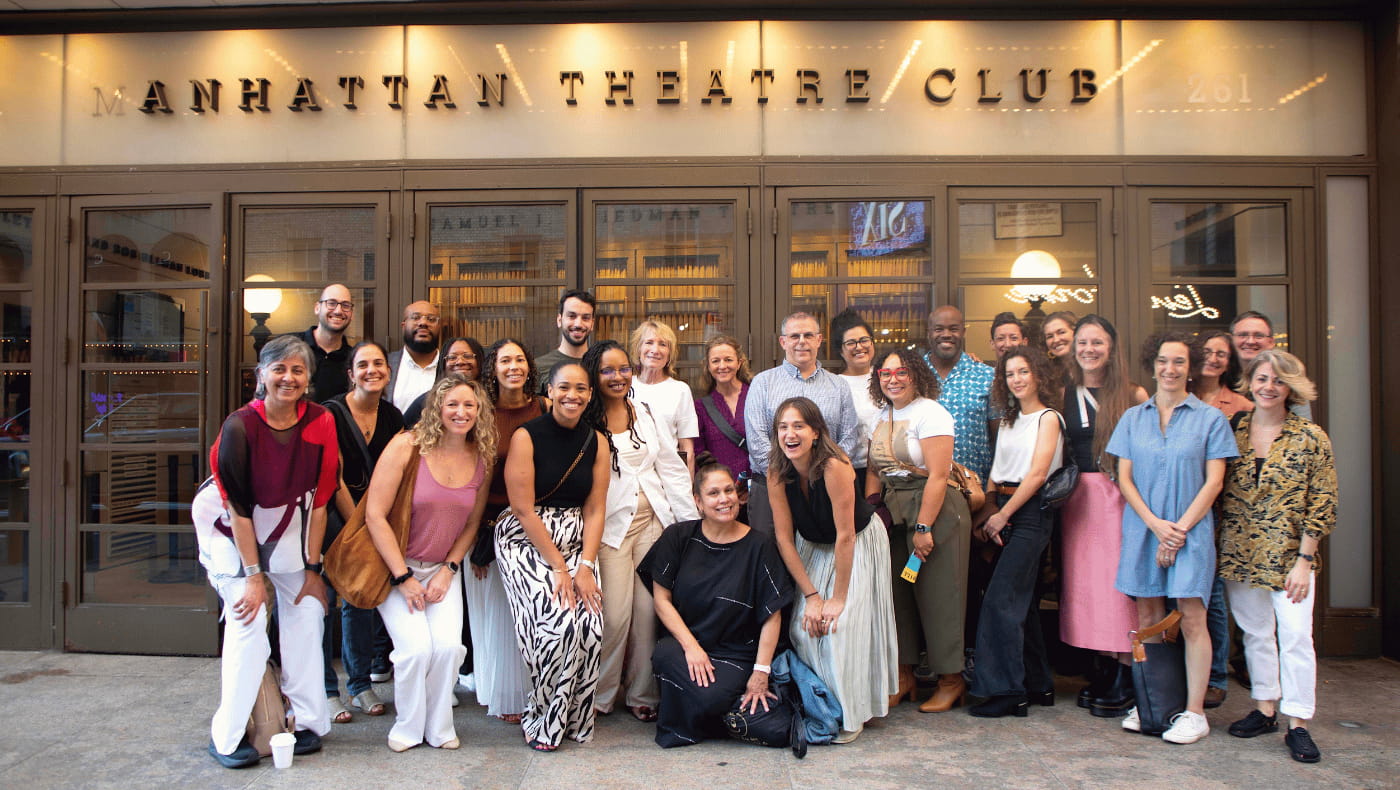
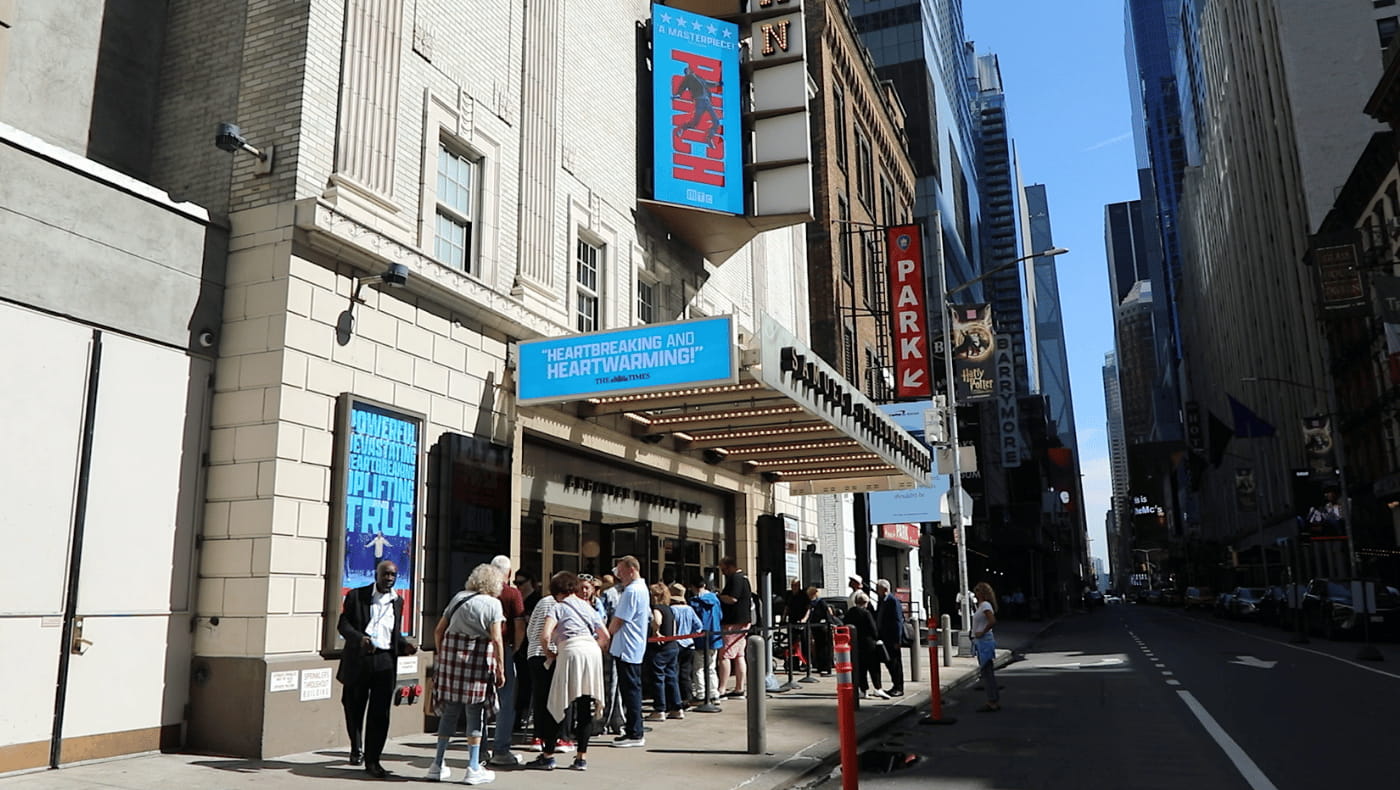
Restorative justice responds to harm and conflict by inviting everyone involved to truly listen to each other. An incredible true story of the power of that approach came to Broadway this year in the hit play Punch. Our restorative justice team partnered with Manhattan Theatre Club to host post-show discussions on how restorative justice can help people move forward after serious harm.
Punch: Restorative Justice on Broadway
Looking Ahead
In 2026, the Center for Justice Innovation will celebrate 30 years of building safety and justice in partnership with courts and communities. We look forward to continuing that work by investing in community-driven solutions, bringing alternatives to incarceration to people with more complex needs who often struggle to access care, and building pathways out of the legal system as early as possible to prevent escalating cycles of harm and justice involvement.
Building on our decades of experience fostering cross-sector collaboration, we are dedicated to spreading community justice nationwide through hands-on guidance and support for communities across the country.
Midtown Community Justice Center and Artistic Noise alumni
Financials
July 1, 2024 – June 30, 2025
$126,594,000
Total Expenditures
Programs and Departments
$207,000
Bronx Child Trauma Support
$4,977,000 Bronx Community Justice Center
$5,366,000 Bronx Community Solutions
$29,575,000 Brooklyn Justice Initiatives
$1,538,000
Brooklyn Mental Health Court
$3,114,000
Brownsville Community Justice Center
$1,486,000
Community Justice Connect
$674,000
Harlem Community Justice Center
$3,955,000 Manhattan Justice Opportunities
$3,397,000
Midtown Community Justice Center
$6,516,000 Neighborhood Safety Initiatives
$5,455,000
Neighbors in Action
$941,000
New Rochelle Community Justice Center
$3,265,000
Newark Community Solutions
$655,000 Parent Support Program
$7,395,000 Queens Community Justice Center
$3,913,000 Red Hook Community Justice Center
$1,477,000
RISE Project
$11,920,000
Staten Island Justice Center
$2,494,000
Strong Starts Court Initiative
$1,426,000
Upstate New York Programs
$146,000
Young Parent Initiative
$473,000
Youth Action Institute
$167,000
Westchester Court Education Initiative
$4,763,000 Administration, Technology, Planning, and Oversight
$34,000 Community Safety Operations
$333,000 Court Reform Operations
$997,000 Family Court Operations
$938,000 Housing Initiatives
National Initiatives, Research, and Policy
$11,509,000 Technical Assistance (includes Community Justice, Gender and Family Justice, International Technical Assistance, Recovery and Reform, and Tribal Justice)
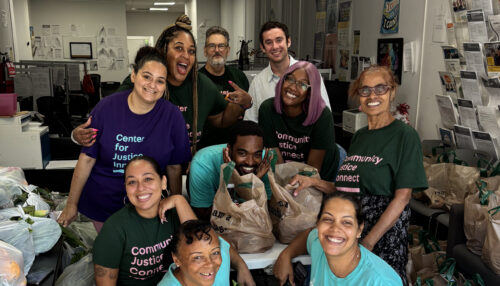


 Too often, communities struggle to make their voices heard in policies and decisions that directly impact them. Our Neighborhood Safety Initiatives team engaged public housing residents across New York City to determine what investments in their developments would look like, totaling $550,000 towards community-led policies. After we helped convene residents, policymakers, and community leaders to shape policy recommendations, more than 5,500 New Yorkers voted on their priorities—from renovating playgrounds and painting murals to investing in on-site career services for young people.