Reduce Harm, Save Lives
Subscribe on Apple Podcasts Spotify YouTube Pocket Casts
Born out of the HIV-AIDS epidemic, harm reduction began as a scrappy, drug-user led movement completely at odds with the War on Drugs.
Almost five decades on, it’s moving from the margins to the mainstream. Its strategies are being adopted by local public health departments, courtrooms, district attorneys, even entire states.
Harm reduction’s goals are straightforward: save lives and reduce the risks of drug use. And its effectiveness is clearly supported by the evidence. Punishment and prohibition, on the other hand, multiply the harms associated with drug use—witness our currently poisoned drug supply.
Daliah Heller has been part of the evolution of harm reduction for 30 years. She became the director of a harm reduction program in the Bronx in New York City in 1997. From there, she says “her trajectory was set.”
Heller is now the Vice President of Overdose Prevention Initiatives at Vital Strategies. Through grants and technical assistance, it works to promote health-based responses to drug use.
As she tells New Thinking host Matt Watkins, “what’s been really important about harm reduction insinuating itself into institutional responses to drug use is the deeper, broader recognition that drug use is a public health issue—not a moral issue, not a crime.”

Matt WATKINS: Welcome to New Thinking from the Center for Justice Innovation. I’m Matt Watkins.
Born out of the HIV-AIDS epidemic, harm reduction began as a scrappy, drug-user-led movement with an ethos completely at odds with the War on Drugs.
Almost five decades on, it’s now moving from the margins to the mainstream. Its strategies are being adopted by local public health departments, courtrooms, district attorneys, even by some entire states.
Harm reduction’s goals are straightforward: save lives and reduce the risks of drug use. And its effectiveness is overwhelmingly supported by the evidence. Punishment and prohibition, on the other hand, only multiply the harms associated with drug use—witness our currently poisonous drug supply.
Today we’re talking to someone who’s been part of the evolution of harm reduction for 30 years now.
Daliah Heller became the director of a harm reduction program in the Bronx in 1997. From there, she says “her trajectory was set.” Heller is now the Vice President of Overdose Prevention Initiatives at Vital Strategies. Through grants and technical assistance, it works to promote health-based responses to drug use.
Here is my conversation with Daliah Heller.
WATKINS: I thought we could start by just talking about the state of harm reduction, generally. You’ve been in this fight for a long time. My sense is it’s been gaining quite a bit of ground—like, the message is being heard.
Some of that is tragically, I think, a result of the overdose crisis and more people knowing people who have died. But I just wonder if you want to reflect a bit, to get us going, on that long arc of harm reduction.
Daliah HELLER: I think you’re right that in some ways it’s a consequence of what has become this massive scale of an overdose crisis in this country: a million lives lost in the last 20 years. They say at least half of Americans know someone who’s overdosed or lost someone to overdose.
But I think the work of harm reduction, of sharing a message that people who are using drugs don’t have to choose between: you’re mandated to treatment—or you should have been in treatment, it’s your own fault; or you go to jail. And if you can’t find your way through those two options, there’s nothing for you—that you use drugs, and that’s a choice that you made, and you’re going to suffer the consequences.
Harm reduction is really about sharing that message that there is another way, that we can look at drug use as something that happens. Drug use has always been with us. Psychoactive drug use has been a part of human society–
WATKINS: We’re never going to eradicate it.
HELLER: We’re never going to eradicate it. So what’s happened with harm reduction in this country is, I think, in part because of this reality of an expansion of opioid use, and opioid use disorder as a consequence, with prescription opioids, which landed us with heroin and then fentanyl, and now all the synthetics that are across our landscape.
WATKINS: Things even worse than fentanyl.
HELLER: Things even worse than fentanyl—or more powerful and more unpredictable, I think, in terms of how we deal with the health consequences. But I would say that where harm reduction has stood in that is always to say, “Well, look, your loved one, your friend, your neighbor, this person you know is struggling with drug use: here’s what we can do, here’s how to talk with that person, here are resources that person can use to keep themselves safe and their loved ones safe while they’re using drugs.”
Over the past two decades, what you can see is the growing energy of harm reduction that is locally rooted, a recognition and understanding and even embrace by formal public health systems that harm reduction is a strategy that needs to be embraced and implemented to not just reduce deaths, but reduce, of course, HIV infection, hepatitis C infection, et cetera.
We’ve seen more and more energy coming both from community and communities locally in places where historically there had not been that space or that power to develop that work, and from the formal structures of public health that can actually fund it and reinforce policies and support laws to make it possible.
WATKINS: When we look at that really significant drop in overdose deaths, I know it’s impossible to pinpoint exactly what role any factor played, but it does seem logical that harm reduction must have played a primary role in that.
And we’ve seen some behavioral changes: I think there are fewer younger people initiating drug use, people are using drugs differently—smaller amounts, test strips, not using alone. Again, that seems like evidence of the message getting through.
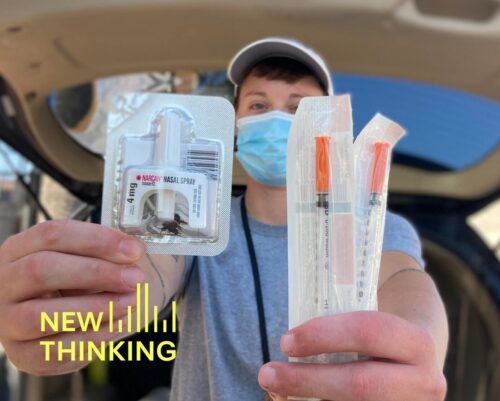
HELLER: All of those things, I think, and it’s about also availability of resources as well for folks. So, bringing Naloxone-access to scale as much as possible and especially for people who we know are most vulnerable to overdose because of their circumstances, the settings they’re in. And then information: ensuring that people who are using drugs know about what’s happening in the drug supply and can make informed choices themselves about how they use, whether they use, what they use.
That’s been an important shift, and I think it’s very much about, if you come back to what harm reduction recognizes ultimately is that we have individual agency in what we choose to do, what we choose to put in our body.
And so harm reduction takes the position that because you have individual agency, we have a responsibility and an opportunity to share with you what we know about what’s happening with drug use and to ensure that you have resources to protect yourself with how you use, what you choose to use.
And in that recognition, ensuring that people can make those decisions has, I think, been an enormous driver for the reduction in deaths over the past few years.
WATKINS: It’s always struck me there’s a certain modesty to the approach of harm reduction almost—like a very deep pragmatism about human nature.
HELLER: That’s right. Yeah, 100 percent pragmatic. I mean, I’ve always said that. So my training is in public health, which came a little bit after my involvement and exposure to harm reduction, but it’s always all come from the same kind of understanding, which is to me public health is about practical strategies for ensuring that we can have the best health outcomes possible for human beings—who are human beings!
Which means we’re a little bit unpredictable. We make up our own minds at the end of the day, and we’re shaped by our environments, in large part. So, how do we think about: how do we support people when they’re using drugs, or how do we talk about drug use in ways that… It’s just a very practical strategy.
WATKINS: Part of the progress of harm reduction seems to me that it’s also insinuating itself more and more into larger systems and responses from those systems—whether it’s public health, whether it’s the criminal justice system.
HELLER: It is progress that we see harm reduction resources, harm reduction strategies, being integrated into more institutional systems. And I think we can see the consequences of that in very positive ways. I’m just going to name something from our work at Vital Strategies. For example, knowing that, and this happened before we were working there, but in the state of Kentucky, for example, that there are 82 syringe service programs operating across the state.
That’s a clear example of how harm reduction, syringe service access, for example, and the wraparound services or other drug use, safer use supplies that you would offer like Naloxone, like fentanyl test strips, Xylazine test strips, being incorporated into an institutional approach.
WATKINS: So people are coming. They’re able to exchange, get clean needles, also access voluntary services if they want them or-
HELLER: Exactly. Again, referrals to drug treatment, which is of course fundamental to how harm reduction services are always being offered to people, but also get support and access to maybe other healthcare services: medical testing, HIV testing, Hepatitis C testing, and connections to care. And we see always harm reduction services are often dealing with people who are showing up with a set of social needs.
But I want to go back to this question of institutionalization and the spread of harm reduction because what’s been really important about harm reduction insinuating itself into institutional responses to drug use is, one: the deeper, broader recognition that drug use is a public health issue—not a moral issue, not a crime.
And historically in this country we’ve developed systems and structures and responses to drug use that treat it as a crime, fundamentally. And treatment historically has been extraordinarily rooted in an abstinence model. And what that is doing is imposing an expectation of behavior on individuals. So it’s saying, “Well, you don’t have a choice here. You need to stop.”
WATKINS: And again, with this sort of unrealistic reading of human nature.
HELLER: That’s right. So, harm reduction insinuating itself allows for this broader conversation that, to me, becomes … For me, harm reduction, again, is like this public health framework. For me, public health is like everything—it’s the wind that was blowing in my face as I was riding my bike here. So I mean, frankly, this is the problem of being a public health person, it’s hard not to see it everywhere.
Truly, then, to me, harm reduction is just a public health response to drug use. It has to be person-centered. It has to be what that person needs.
But if it’s person-centered, then it’s harm reduction, and that means, “I acknowledge that you’re using drugs. Do you need fentanyl test strips and Naloxone? Where are you using? How are you using? How can we make sure that you can stay safe and keep the people you’re using safe. And do you want to check in tomorrow? You can come back. We’re open until midnight. Oh, you want to go to treatment tomorrow? We can make a phone call, and they’ll be ready to pick you up or they’ll be here.”
How can we think even about how we offer treatment differently to make it easier to access so treatment and harm reduction become much more integrated? I think that’s a place we haven’t gotten to yet.
So what do the institutions bring to harm reduction? Well, it’s increased funding availability—public funding availability for programs, which is really, really important. Historically, harm reduction didn’t grow as “a program.” It wasn’t a community-based organization doing a service that was incorporated and funded. It’s a group of volunteers.
WATKINS: No, it’s very often drug users saying, “Nothing about us without us.”
HELLER: That’s right. And people coming up with ways, strategies, for keeping themselves and their community protected as they’re using drugs.
Where did Naloxone come from? Naloxone existed as a medication that was used in emergency medical response to address an opioid overdose and also used in surgery to bring people out of opioid sedation that might be used.
But to do community-based distribution of Naloxone was an invention, an innovation, of harm reduction services. It was an innovation of people doing harm reduction work in the community. Where did fentanyl test strips come from? Again, an innovation of harm reduction.
But we see all of these things now being embraced and taken up and supported, especially I think importantly by local public health and state public health authorities across the country, and funded, and programs funded to do this work, so that it wasn’t riding off people volunteering on their Saturday nights and driving their car out to a location where they knew people who used drugs might congregate at that time and having a trunk full of syringes to distribute.
That’s still happening in many, many places in this country, but we’ve seen broader support from the institutions, in that way.
WATKINS: Probably the biggest system that’s out there for harm reduction to work with, or contemplate working with, is the criminal legal system. Now, obviously it’s the harms of the responses to drug use that come from the criminal legal system—that’s one of, if not the biggest, source of harm for people who use drugs.
So on the one hand you’d think, “Well, how can harm reduction start trying to insinuate itself into the criminal legal system?” On the other hand, if you don’t start trying to reduce the harm that that system is causing, you’re leaving a lot of harm on the table, so to speak.
Am I putting my finger clumsily on a real tension here?
HELLER: No, you’re absolutely right. And I think there are probably differing views in people who would consider themselves part of the harm reduction movement about working with the criminal justice system. But if we’re not thinking about how the criminal justice system touches people who use drugs, and trying to figure out how we orient those touch points to reduce their harm, so to speak, then I think we’re leaving a lot of people out there.
Where I find myself frustrated, I think I always want to see things brought to scale and being systematized or normalized, like funding for harm reduction services.
Often what we have are “programs,” and programs look different. And so in this county, in this state, this program got off the ground and it looks like this, but it’s very uniquely developed to operate in the environment in that local county, and that relied on the leadership of this local D.A. who believed in the work and thought through how to implement this program in this way with the local sheriff, et cetera, et cetera.
So, we have these programs that you could call harm reduction or insinuating harm reduction into services like diversion—pre-arrest diversion, for example. You could actually call that harm reduction. That’s harm reduction because instead of arrest, we’re diverting you to services.
How does that model get designed? Are you mandated to go to that, to follow up on that referral? Is anybody going to try to find you to help you so that you don’t have to go show up to a brick-and-mortar location somewhere in the city to follow up on that referral? And if you don’t follow up—like if there is a mandate, what are the consequences? Is it arrest? So have we just created the same kind of fork in the road that we’re always with treatment or jail? It’s not really harm reduction, then, right?
Probation, I’ve always felt like probation is an amazing opportunity for insinuating harm reduction into the criminal justice system.
WATKINS: And it’s such a huge system. So many people are on probation.
HELLER: Exactly. And especially people who are there for drug-related issues or get driven in there and who are themselves using drugs, maybe struggling with drugs. And we have to acknowledge also that not everybody who uses drugs has a substance use disorder by the criteria that define it. And so also important to recognize that harm reduction can simply mean checking in with somebody and making sure they have the resources to use safely, but not that they need help to stop using drugs.
But probation as a model has evolved from this work model, making sure you have a job, to this kind of clinical model of being a case management system, so to speak. But how do we support probation departments or probation officers to identify, recognize, understand drug use as a health issue, first and foremost, and recognize that they’re actually in a helping position in their relationship with the person they’re working with on supervision to be able to get access to services and support.
WATKINS: I mean, you’re asking a probation officer, I guess at that point, who I think would tend to see things, obviously, through a criminal justice perspective, to say you have to treat this as a public health—public health is the wind in your face, as you were saying—you have to treat this as a public health question, not a criminal justice question, not a punishment question, you have to consider the wider context.
That’s maybe part of what you’re saying is hard to take to scale, I suppose.
HELLER: So it’s really, to me, probation officers can benefit from the education, but then they also need to benefit from the directive. And that’s up to leadership, to say: “Hey guys, if we identify drug use, take it into this context and think about it as a health issue first.”
And so what does it mean for a probation officer then to say, “Hey, do you have access to safer use supplies? You know about harm reduction? Do you know about that program across town? Do you have a Naloxone kit at home?”
The power, first of all, the importance of that from a health perspective, of course, because that puts that person’s health center and first in the conversation. But also I have to say what I feel like is really powerful about that is culturally to have an individual who’s sitting in that position and has that power over an individual’s life: you’re on supervised release. That means I can write you up for something and change the course of your…
WATKINS: Your life.
HELLER: Your life. And to have that individual acknowledge and recognize drug use as a health issue, and to speak to the person under their supervision about drug use in this kind of non-criminal, amoral… I mean, amoral means not moralistic or…?
WATKINS: Not quite, no, but I-
HELLER: Or no. Maybe amoral-
WATKINS: But I get your point. I mean–
HELLER: You shouldn’t… You better cut that! [laughter]
WATKINS: I’m going to keep it in! [laughter] Not moralizing.
HELLER: Not moralizing!
WATKINS: Free of sanctimony.
HELLER: Free of sanctimony. That’s good. Okay. Free of sanctimony, yeah. There’s a lot of cultural power in a P.O. talking to a person under their supervision about drug use as a: I care about you as an individual and I want to make sure you are okay: Your health is okay; your head is okay; how you’re living is okay. That is really an opportunity that I think, again, it has to come from leadership.
Now leadership means probably consultation or cooperation from other branches of the criminal justice system or other arms of the criminal justice system because if you’re supporting your P.O.s to not, for example, issue technical violations to people for continued drug use, then you’re also affecting other parts of the criminal justice system—you’re not driving people back to or into incarceration. And you’re not putting people back into courts or keeping them in courts, et cetera.
I think that there’s a broader conversation to be had if you were going to bring that to scale, so to speak. However, it does feel like probation is very well situated for that approach because there are so many people who end up pulled into probation systems who are using drugs.
WATKINS: And it’s a one-on-one relationship and harm reduction is very focused on relationships, right?
HELLER: That’s right. And it is very much, yeah, it’s established as a clinical model of this P.O. working with an individual. So exactly, there’s an opportunity for assessing and responding to individual needs which roots harm reduction as a health response to drug use to the person sitting across from you.
I do think that the challenge that we have with harm reduction, even if the system says, “Yeah, yeah, I understand that drug use is a health issue, but I still have to treat—because there are drug-related behaviors—I still have to treat drug use as a crime, not for itself, but people who are using drugs, they’re not incarcerated for their drug use. They’re incarcerated for other criminal behaviors that we associate with their drug use.”
And so that’s where you walk into this murky territory of: what are we actually talking about and what’s a cause and a consequence? I would argue, and I think harm reduction would argue, that the criminalization of drug use drives the criminalization of drug use.
WATKINS: It triggers this terrible cycle.
HELLER: It triggers a cycle. And so breaking that cycle is the leap of faith and it’s a leap of faith that can only be done if we’re fully and wholly investing as well in a health and human services response to drug use, which we have not, historically, in this country. We can talk about harm reduction being under-resourced, but truthfully treatment is under-resourced, and addiction medicine is unfortunately still a small subspecialty in medicine.
And so we have a long road to go and/or we have a big shift that we need to make. What has happened is the shift has started to happen with this overdose crisis, but it’s fragile, and it’s work that needs to continue because we still operate in an environment where our dominant response to drug use is criminalization.
WATKINS: Right—it’s just such a long reflex. I guess, if we’re talking about replacing wholesale criminalization, we have to replace it with something, and that something is access to high-quality, low-barrier treatment.
HELLER: And services.
WATKINS: And services. And I think what you’re saying is we’ve never really experimented with that approach. There’s a big debate, as it keeps resurfacing, about coercing people into treatment and this and that.
But what about if we just tried making treatment engaging and inviting and easy to access?
We’ve never done that though!
HELLER: We’ve never done that! We need to make a leap of faith, but I think there is fundamental work that can be done. A question that I’ve always had, and we’ve seen this start to happen in treatment programs in some places here and there: again, like we have judges taking up harm reduction in their courts and trying to implement more of a harm reduction approach in how they lead their courts; similarly, we’ve seen treatment programs take up harm reduction.
I think what’s happened is we have a very tight rubric around how treatment itself is technologized and there’s a need to blow that up a little bit because, yeah, treatment programs, I’ve always said, “Just make treatment desirable!” When we do harm reduction work, the whole, “meet them where they’re at,” well, we really take that seriously!
I ran a harm reduction program, and we went to SRO hotels and knocked on doors on Saturday night and said, “Hey! We’re here!” But we brought doctors to the… Not only did we bring harm reduction supplies, and we had a van, we could take you somewhere if you wanted to go into treatment. We brought food, obviously, first and foremost.
Why doesn’t treatment make treatment easier to access? Why doesn’t treatment offer me a plate of food and I can just come in and sit down and talk? Well, part of that is because we’ve set up a structure for how treatment is paid for. And so, therefore, what is this box that you have to, so you have to get enrolled and then we’re billing an insurance card.
How do you blur what is called a treatment program into being a community-based program that is there to support the health and wellbeing of people who are using drugs?
WATKINS: You’d need to put the community in charge of it, presumably, or at least the outreach part of it, and you’d need to fund it with the same vigor that the war on drugs has been funded for all these decades.
HELLER: Yeah, but even… you could begin somewhere.
WATKINS: Yeah.
HELLER: Because you could begin at the treatment program level. A treatment program can say: “We want to add these things.” Maybe less now that, but there are grants out there you can go for and say, “We want to add an outreach component to our program. We want to add a drop-in center component to our program.”
But when we talk about access to treatment and treatment that is easy to access, it’s built into the whole service. So I need help with housing, or I need help with drug use, I need help with this legal case that I’ve got, I need help with childcare—all of those things become a community response.
So treatment itself is also not a thing that stands alone. We need to be able to address all of these issues and in a way that’s coordinated, ideally integrated, I feel like so that people have access—as easy as possible—to all of the things that actually, in a lot of cases, drive harmful drug use.
WATKINS: So, a lot of what we’ve been talking about in this conversation is the progress that harm reduction has been making. But the opponents of harm reduction remain out there. It’s a well-funded constituency making often the same arguments they’ve been making for a long time and a lot of those have to do with this concept of disorder, and this intersection of homelessness and drug use and untreated mental health issues. And feeding this narrative that harm reduction is associated with disorder.
Now this disorder is a construct to some degree—and a politically useful one. It’s also a real thing: nobody wants people using drugs by a playground or a school or something. But I’m sure that you have reflections on the uses and abuses of this narrative of disorder and how harm reductionists can counter it—because I’ve heard you say that bad narrative drives bad policy.
HELLER: Yes, no question that harmful narrative drives a harmful cultural response, which drives a harmful policy response to social issues. And we see that happening all the time. I think we live in a time when there’s a lot of opportunities for people to shape and create narratives about the things that people experience and how people are living, and what’s going on with people’s lives.
So, we’ve had this rise in homelessness, we’ve had a rise in unsheltered homelessness as a consequence of the rise in homelessness—it’s not the only homelessness; many people are in shelters. But there is an unsheltered homelessness that is visible in cities and towns across the country. That rise in homelessness happened as a consequence of an unaffordable housing crisis.
But in the U.S. what’s happened is we also have this remarkably synthetic drug supply. These drugs are potent and quite unpredictable in how they show up, where they show up, and in what quantity. And so for people where drug use happens can also coincide with where unsheltered homelessness is happening.
And then we have this third issue of mental health issues in our country, in our world. So what do we not have? We do not have a meaningful and effective community mental health service safety net.
And so for some people, that’s showing up as unsheltered homelessness, and there’s drug use in those spaces—not everybody again, we’re talking about. But what happens is harm reduction meets people where they’re at. So harm reduction-
WATKINS: And where they’re at, they’re on the streets.
HELLER: And where they’re at, they’re on the street.
They’re in an encampment, that’s… And encampments are communities, right? They’re people trying to take care of one another. It can be much more dangerous to be homeless alone and sleeping alone out rough in the street somewhere than to be in a community where at least there are people around you who you feel like can look out, folks can look out for one another.
So harm reduction, going to those places and making sure people can care for one another and offering services and support including treatment. Harm reduction is always… There’s all the data. I think the CDC, I don’t know if it’s still emblazoned on their website, but people are five times more likely to get access to treatment through harm reduction services than if they’re not getting harm reduction services and-
WATKINS: Right. Just being exposed to harm reduction makes you more receptive to treatment.
HELLER: And I think just gets you access.
WATKINS: And gets you access.
HELLER: Back to the issue of desirability and access to treatment, how do you get into treatment? There’s no easy path.
These conversations that have also grown around involuntary treatment or that we need to implement mandated treatment or forced treatment… First of all, we know that forced treatment is actually associated with an increase in overdose for folks once they leave. Two, it’s no longer a healthcare service if you’re mandating or forcing somebody into treatment.
Unfortunately, our treatment systems, drug treatment systems, have for a long time benefited from mandated treatment—whether it’s through the criminal justice system, but more broadly through child welfare systems, through public assistance systems where people are told, “Well, if you go to treatment, we will monitor you and you can keep your child living at home.”
But that’s not a solution, a health solution, to what the person is dealing with and maybe self-medicating with their drug use. So how can we get treatment to that place so that it becomes more like harm reduction? Because it could.
WATKINS: It strikes me that the enemies of harm reduction have a very simple story to tell that seems intuitive: punishment deters, punishment helps—now, all of the evidence shows that it doesn’t, but that can be… It has a common sense appeal, whereas harm reduction is sort of this modest and pragmatic… The modesty maybe makes it a tougher selling point in some ways.
HELLER: I think it’s also, if I may, I think the challenge is that in some ways the historical orientation of this country places a punitive response at the center of a lot of how we deal with society. It’s a sort of natural stance, unfortunately. It’s deeply cultural, as a consequence, because not everybody gets punished as we know and the people who get punished are… It’s driven by race, and it’s driven by class, and that is a historical artifact of the United States.
I don’t know how to think, how to sell the story differently and to your point of like, it’s very common sense. It feels like, “Well, yeah, of course you’re just punishing…” Because in other cultures, it’s a very common sense thing to say, “Well, yeah, that person’s suffering!” And I know if my brother was suffering, I would want to reach out, hold his hand, and help him get what he needs to stop suffering.
And so how do we change our orientation as a society to how we think about and view suffering? Because public disorder has also—we can also call it public suffering. Nobody chooses to live in a tent on the side of the highway. Nobody wants to live in a tent in a city when they could have a roof over their head to keep the rain and the cold out.
So, how do we help people to see differently, I think, is really the challenge that people like yourself who do communications work can help us solve.
It’s difficult for people to see the work of harm reduction often because it’s difficult work. Harm reduction is working in the spaces where people are experiencing suffering. It’s difficult for people to look at suffering in a multidimensional way and instead of just seeing it as something two-dimensional that we’ve been inured to because we see it in-
WATKINS: Right, or just to look away.
HELLER: Look away and yeah, switch the channel. I mean, I guess we don’t watch TV anymore: switch the “streamer.” Versus seeing a person and seeing that person as a human being in front of you and they’re somebody’s sister, mother, aunt, daughter. How do we therefore then shape our public response with that understanding? I mean, it’s a communications challenge.
WATKINS: We’ve been talking a lot again about the progress of harm reduction, but obviously that progress has come at the cost, not at the cost, but has come along with a lot of lives have been lost as we’ve also been talking about.
And in some ways that’s forced a tragic recognition on a lot of people on the failures of the standard policies and responses to drug use. And I just wonder, it’s not really a question to wrap things up, but just an opportunity for you to reflect for a second on: you’ve been in this movement a long time, there’s been progress, there’s also been a lot of deaths.
HELLER: I think harm reduction is stronger than ever, because what’s happened is harm reduction has become stronger locally and I think I made a comment earlier about the history of this country, but I think another important piece of the history of this country is that everything is local, and so that’s good and it’s difficult when you do policy work.
So, to take my systems-obsessed hat off for a second and just recognize that the important value of this local program that got its start here because this guy pushed really hard and did all this work and da, da, da, and then convinced these people and now this program’s been operating and has the broad public support in their town and is doing this great work and is a partner with the local health department, et cetera.
And this woman over here who spent her Saturday nights driving her car out to that corner and meeting with folks who were using drugs and distributing supplies. And this person who went out to that holler in that Appalachian state somewhere… I learned the term holler-
WATKINS: I’m impressed, yeah!
HELLER: …when I was working in West Virginia. Yeah. It was very interesting. And met the folks who were living in that holler and made sure they got what they needed on Sunday mornings. All of that work is happening and has happened and grown in ways that, when we see harm reduction gatherings in this country, like the big national conferences now, we have Drug Policy Alliance is our main national conference for harm reduction, it’s bigger than ever every time.
And it’s amazing and remarkable and heartening to see that kind of spread and across generations. I mean, I feel I’m kind of finally acknowledging that I’m aging, and as I’ve reached middle age—I think I’m in middle age now, although I’m not… that there are people who… I started this 30 years ago and there are all these people I don’t know at all! I used to go to a conference and you knew everybody. Now I kind of don’t know really anybody—and that’s amazing!
That means that the work is spreading and growing and getting passed on and it is much more, you say harm reduction to somebody and they’re like, “Oh yeah, harm reduction” People know it! It has entered into like the Netflix series and it’s amazing and that’s partly the work of some people in harm reduction who made sure that they could do some education of folks in Hollywood about harm reduction.
But it’s also about the practical spread of this kind of understanding of how we can respond to drug use and help and support and save our loved ones in a way that is like… Not… yeah, not patronizing, not–
WATKINS: Not sanctimonious. Meeting people where they’re at, right?
HELLER: Meeting people where they’re at. And because of that local investment, knowledge, understanding… There are still struggles for power—of course, that’s always going to happen. But I think that spread has insinuated itself in a way… Insinuated… I mean, it’s been hard work on the part of people who’ve been doing this for a long time or taking up the mantle.
And somebody right now is struggling to get their harm reduction program recognized, or making Naloxone kits somewhere in this country, or putting together a bag of supplies to go out tonight and do harm reduction outreach in a neighborhood in their community.
And that’s happening, the fact that that is happening in such a much more widespread way and the strength of the community that has been built through a really multi-generational movement at this point in this country is, I think, worth a lot if we can imagine where the future takes us.
WATKINS: Well, you are one of those people who’ve been doing this work. I don’t know whether you’re middle-aged or not, I can’t answer that question, but you’ve clearly been dedicated to this path for a very long time.
So, I want to thank you for that work very much, and then thank you for all this time that you’ve given us today for this conversation.
HELLER: It’s a pleasure talking with you.
WATKINS: That was my conversation with Daliah Heller. Daliah is the Vice President of Overdose Prevention Initiatives at Vital Strategies.
For more information about today’s episode, click the link in your show notes, or go to innovatingjustice.org/newthinking.
I’ve been learning about harm reduction through conversations I’ve had for years now with Dave Lucas, and Dave is the primary person I want to thank for help with this episode. Heartfelt thanks as well to my colleagues Catriona Ting Morton, Michaiyla Carmichael, Elijah Michel, Julian Adler, and the great Daniel Logozzo.
Today’s episode was edited and produced by me. It was recorded by David Herman at Brooklyn’s Good Studio. Samiha Amin Meah is our director of design. Emma Dayton is our V-P of Outreach. And our theme music is by Michael Aharon at quivernyc.com.
This has been New Thinking from the Center for Justice Innovation. I’m Matt Watkins. Thanks for listening.
Related Updates
Related Resources
When Policy Isn’t Enough: Recriminalization in Oregon