
What seven years of Tactics & Choices taught us, and why the program has a new name
By Gene A. Johnson, Jr.
Associate Director, Supervised Release Program, Center for Justice Innovation
When people think of those arrested for intimate partner violence, they often picture someone else’s neighborhood.
I picture my own.
They are my neighbors and family members. They are coworkers. They may be the person working in the store I visit every week, my barber, or even the attorney I retain. They are not people who exist apart from the rest of us. That is why I have devoted so much of my work at the Center for Justice Innovation to this issue. Community safety is not only about responding to harm. It is also about creating meaningful opportunities for people to recognize it and choose a different path.
The Center for Justice Innovation’s Pre-Trial Relationship Education (PRE) program is an educational class for people with intimate partner violence cases participating in New York City’s Supervised Release Program, which allows eligible people to remain in the community while their criminal cases are pending. Participants may be ordered to attend by a judge or may attend voluntarily after being referred through Supervised Release. The program originally launched in January 2020 as Tactics & Choices in partnership with CASES and CJA, and the partnership has since expanded to include The Fortune Society. We have facilitated more than 500 classes, with over 13,000 registrants.
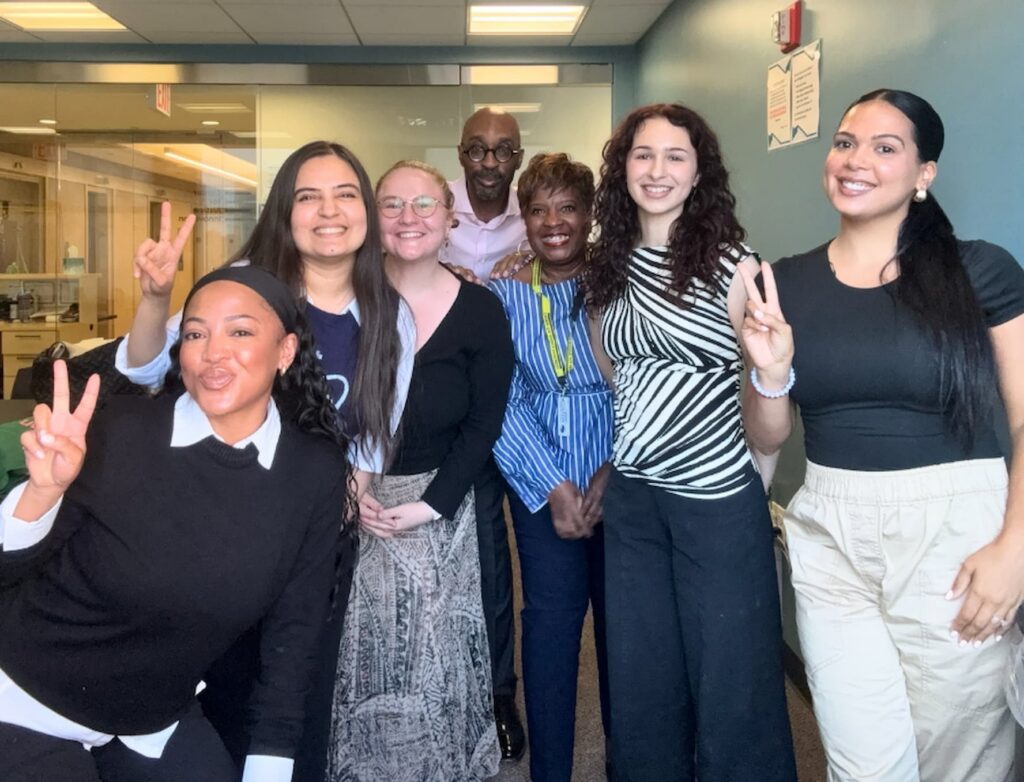
Programs should evolve as we learn. After seven years of listening carefully to participants, facilitators, Supervised Release staff, and other community partners, Tactics & Choices is becoming the Pre-Trial Relationship Education (PRE) Program and the revised men’s curriculum is becoming ARC: Awareness, Relationships, and Choices. Classes are offered virtually and in person, and participants can receive the class in their preferred language through interpreters arranged as needed. PRE will continue to offer separate curricula for men, women, and LGBTQ+ participants. While our goal is to revise each curriculum, we began with the men’s, the largest population we serve.
We believe that behavior change starts with awareness.
During Domestic Violence Awareness Month, we’re reflecting on what we learned and how it shaped our curriculum.
PRE offers education; not therapy, nor a long-term abusive partner intervention program. ARC is delivered as a single two-and-a-half-hour class. We do not expect one class to undo beliefs and behaviors that may have developed over years.
But we believe that behavior change starts with awareness.
Creating space for reflection
Facilitator observations, participant feedback, and conversations with Supervised Release staff point to one lesson: people are more willing to examine their behavior when they do not feel reduced to their worst actions.
“I didn’t know that was abusive.” That awareness gives us somewhere to begin.
That does not mean avoiding accountability. It means creating a space where accountability becomes possible.
When people feel judged, they often stop listening. When they have room to reflect and hear from their peers, the conversation changes. At the start of class, facilitators explain that participants will examine behaviors without shame, blame, or accusations, and that the purpose is to build awareness and offer choices. Participants may reconsider an assumption or recognize a controlling behavior they considered normal.
Sometimes facilitators hear a sentence that reminds us why this work matters. “I didn’t know that was abusive.” That awareness gives us somewhere to begin.
Learning from the people in the room
Participants often learn as much from one another as they do from the facilitators. They challenge assumptions, recognize a behavior’s impact, and describe different responses.
Those exchanges are important because they help participants recognize abusive tactics in relationships and create opportunities to hold each other accountable when power is used over their partner.
What changed in ARC
When redesigning the curriculum, we replaced outdated examples, created more room for discussion, and strengthened the focus on abusive tactics, power, accountability, and the choices available before conflict escalates.
ARC helps participants identify moments in an escalating conflict when they can pause, step back, and make a different decision before causing harm.
If we want safer communities, we must also create meaningful opportunities for those who cause harm to examine their behavior, understand its impact, and make safer choices.
In developing ARC, we became clearer about something fundamental: we are interested in behavior, not labels.
We do not have to label a person before examining something they have done. A productive conversation can begin with simpler questions: What happened? Who was impacted? What choices were available to you? What could you do differently in the future?
Those questions create room for accountability without shame.
A beginning rather than an ending
During Domestic Violence Awareness Month, our attention appropriately focuses on survivors and the effects of intimate partner violence. Promoting survivor safety must remain central to this work.
Supporting survivors and engaging people charged with intimate partner violence are not competing goals.
Supporting survivors and engaging people charged with intimate partner violence are not competing goals. If we want safer communities, we must also create meaningful opportunities for those who cause harm to examine their behavior, understand its impact, and make safer choices.
This work cannot guarantee change, but it can help lay the foundation for greater accountability and contribute to safer outcomes. Building safer communities requires us to engage people charged with intimate partner violence while their cases move through the legal process. Creating opportunities for reflection, education, and accountability is one part of the effort to prevent future harm.
It is not the goal nor expectation for a participant to leave the two-and-a-half-hour class completely transformed. A participant might leave recognizing something they had never considered harmful. They might better understand how their behavior impacts others, recognize a moment when they could pause rather than escalate, or leave with one additional choice the next time conflict arises.
Those are small changes. But behavior change must start somewhere. It start with awareness.