What if an underused space in a courthouse could be transformed for, and with, the community?
That’s the question our Midtown Community Justice Center team, in partnership with the New York State Unified Court System, answered with their upcoming transformation of 1,600 square feet of neglected space into a multi-use haven for programming and community safety. This marks the first time holding cells have been transformed for flexible use as a community space.
Since 2019, the space in the Midtown Community Justice Center building has been reserved for the use of emergency holding cells for those in detention in other parts of Manhattan. But when it became clear these emergency use-cases were rarely needed, a group of collaborators came together to reimagine what alternatives could be possible.
Redesigning Space to Serve the Community
Along with the input of community members who use their services, the Midtown Community Justice Center and the court system seized an opportunity to expand a shared vision of justice—and transform the holding cells from an underutilized space to one that is flexible, functional, and people-centered.
To make that possible, our Neighborhood Safety Initiatives team gathered input from a diverse group of people who know the Community Justice Center best—including staff who work with participants every day, the partners who make this work possible, and participants themselves—to ensure those most affected were shaping this project from the start.
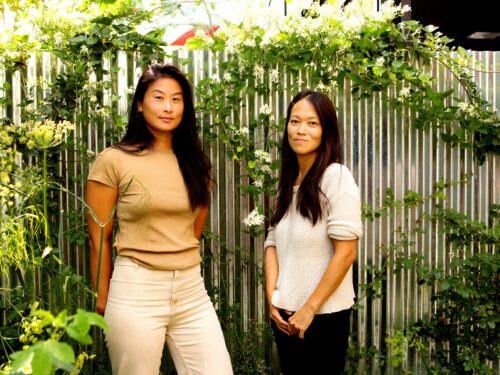
With this community knowledge as a foundation, architects Talitha Liu and Lexi Tsien of Soft-Firm were selected to envision what the space could look like, bringing community justice to everyone who walks through its doors.
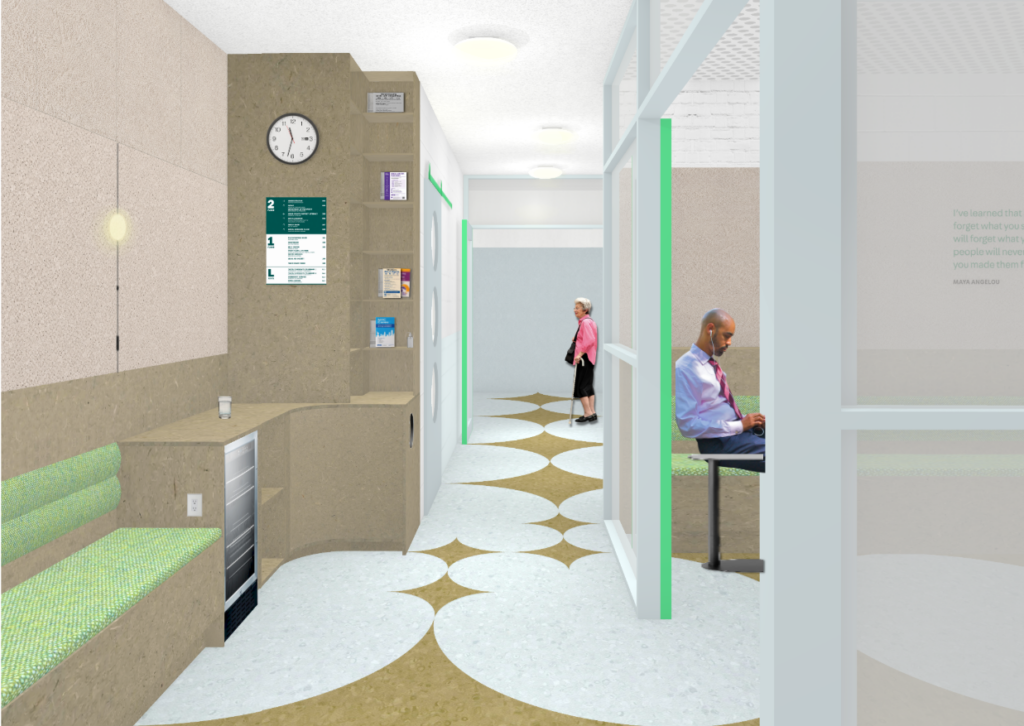
“The feeling inside the space right now is very institutional, carceral, and underutilized. The rooms haven’t been used for quite some time and they’re there only in case of emergency,” Talitha Liu of Soft-Firm said of the current layout at the Community Justice Center.
The end goal is to transform the current holding cells into a space designed with flexibility and openness, while still maintaining their ability to convert back to secure rooms.
“This project explores the idea of incarcerated versus free and takes people beyond a cell to really think about a network of care, community, and support,” Lexi Tsien explained.
Centering Flexibility and Freedom
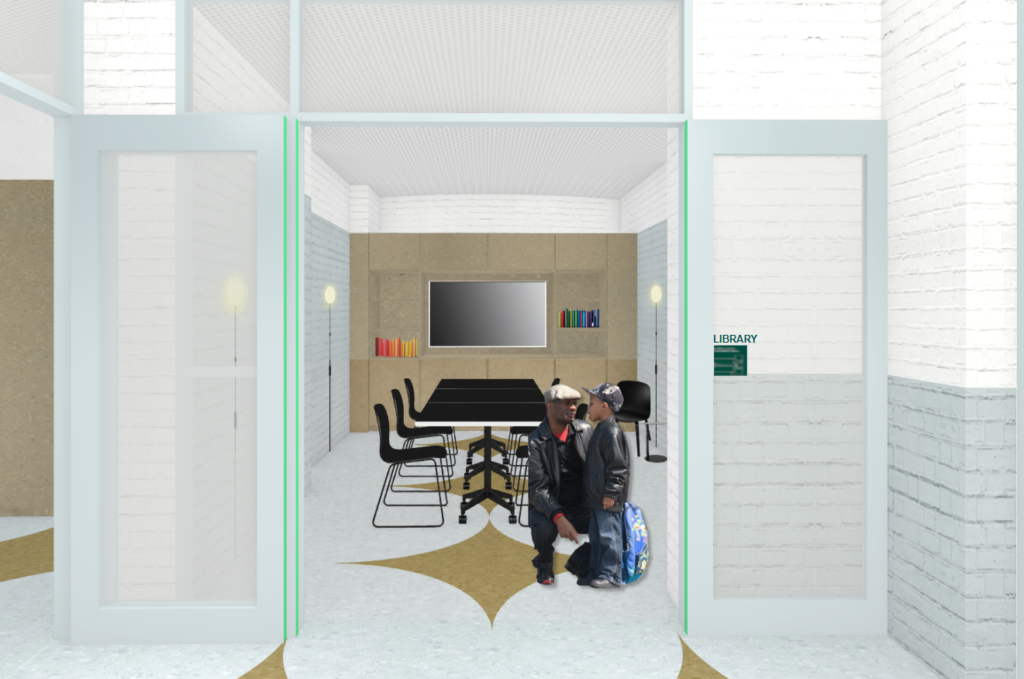
One of Soft-Firm’s guiding principles is minimal means and maximum effect. They plan to use customized doors and walls so that staff can easily configure the space to different sizes and needs—from a social community lounge to a meditation space for healing practices or a place for someone to take a private call.
This project . . . takes people beyond a cell to really think about a network of care, community, and support.
“There are many kinds of people who will use this space, so our goal is to meet everyone where they’re at,” said Talitha Liu, adding that the space aims to be generous to every single person, whether it’s a courtroom appearance, a meeting with a family, or someone who needs a place to rest and process.
How Design Shapes Culture
Soft-Firm reflected on how culture shapes how buildings are laid out, the materials used, the flow of visitors, and more. And the opposite is true, too: space creates culture.
Design decisions aren’t neutral, and they shape behaviors and relationships.
“The concepts of justice and injustice are reinforced through spatial design,” said Lexi Tsien. “Design is a vehicle for rethinking the status quo. Attention to detail can really have a ripple effect, something as small as the pin in a door or the way that it locks can help us rethink an entire system.”
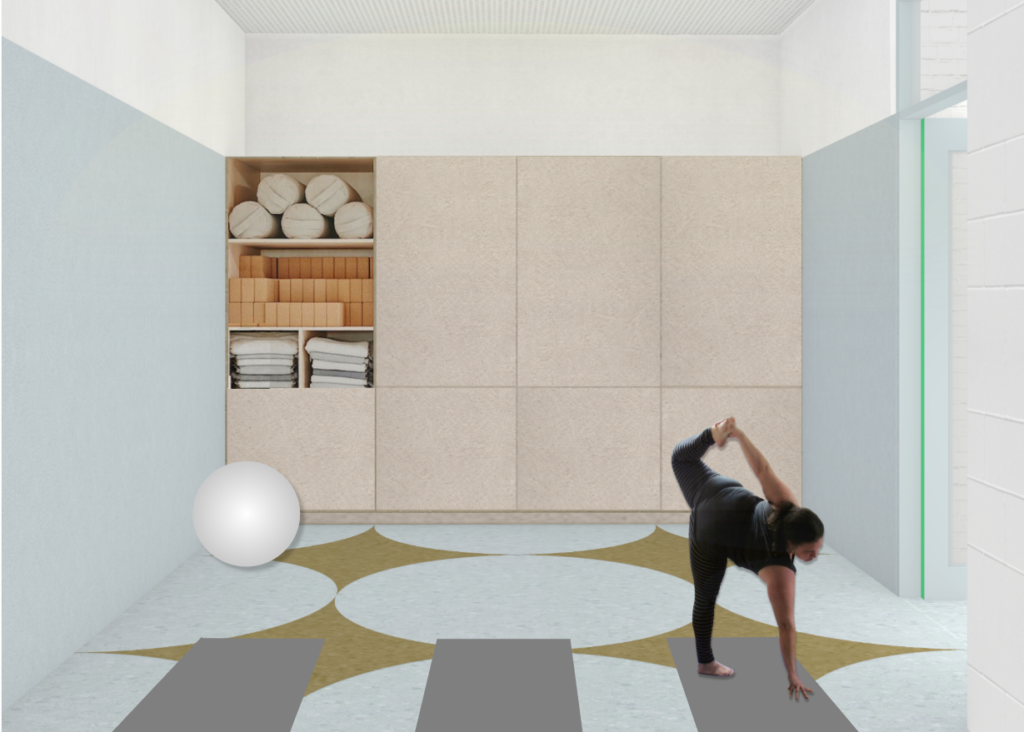
A grounding philosophy within our place-based work across the Center for Justice Innovation that Soft-Firm shares is that there is self-determination in the built environment. Designing these rooms so that they will be used in ways we haven’t even thought of yet is an intentional decision. In that way, it can really become the Midtown Community Justice Center’s own place.
“We are thinking about not only this physical space, but also the Center’s many chapters and networks. That’s a much broader mission that we really, really support and feel passionate about,” said Lexi Tsien.
Pivotal to this project is remembering that “design decisions aren’t neutral, and they shape behaviors and relationships,” Lexi Tsien said. “This project is really special, and it represents a larger mission to really shift the system from transactional to relational,” Talitha Liu added. “We’re really hoping that design is an active tool for reframing someone’s relationship with the justice system to be centered around support and care.”