-
Courtney Bryan

Courtney Bryan
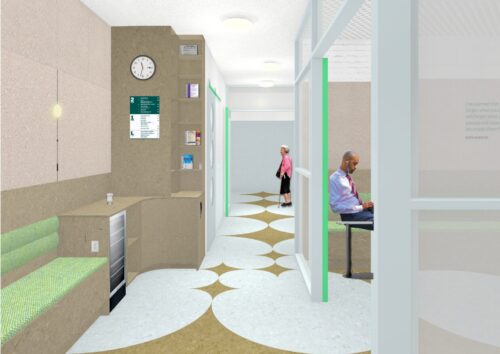
The story of the holding cells at the Midtown Community Justice Center is the story of Community Justice.
When the Midtown Community Justice Center opened in 1993, it changed the way we think about courthouses. To prioritize help over jail, social services were brought into the building itself to provide counseling, job training, parenting education, and more. Rather than making people go to the towering, impersonal courthouse in downtown Manhattan, it brought justice to the neighborhood with a modern courtroom and a single judge.
An early attempt to improve the dehumanizing jail experience eliminated bars on the holding cells and replaced them with shatterproof glass so the space would feel more open and less isolating. We were still using those cells to hold people arrested for violations and misdemeanors when I served as the Midtown Community Justice Center’s director from 2008 to 2013, though the holding cells haven’t been used since 2019.
In an ideal world, we could eliminate the need for holding cells in the first place. While we haven’t quite gotten there yet, the Midtown Community Justice Center has helped reduce the need for incarceration by serving as a model example of alternatives to incarceration—the kind that has helped both reduce crime and reduce the jail population in NYC from 18,600 when Midtown opened 33 years ago to about 6,500 today.
Lower rates of crime and policy changes that eliminated custodial arrests for many low-level offenses have finally helped make the cells at Midtown obsolete. This has allowed us to take the next step in the courthouse’s evolution by transforming the holding cells into a flexible, inviting space to serve those coming through the court and the wider community.
The renovation project is just getting started, informed by residents with the help of our Neighborhood Safety Initiatives team and by architectural firm Soft-Firm with input from staff, partner organizations, and program participants. It’s an exciting milestone for us and Community Justice, marking the first time court holding cells will be transformed to a space meant for healing and connection.