Al Tabar Hudgins, a program manager on the Center's RISE team, shares how he approaches the work for Domestic Violence Awareness Month.
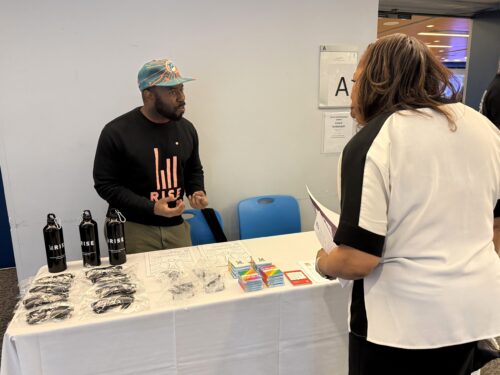
This August, RISE, the Center for Justice Innovation program which engages people who cause harm to take accountability and change their behavior, took part in the annual Luggage of Love event, hosted by Council Member Rita Joseph. This event supported young people in foster care by providing them with suitcases and travel essentials. At RISE’s table, we had games for those passing by to engage with.
When one young man sat down to play Connect 4 with me, I gave him a short overview of the work that RISE does. I shared that we talk about healthy, unhealthy, and abusive relationships, and explained how we provide an opportunity for people to reflect on their own unhealthy patterns in relationships. By the time I finished the second sentence, the young man was telling me about his own journey through romantic partnership.
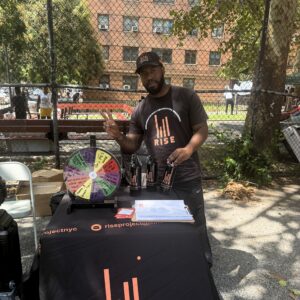
We ended up playing five rounds of the game. The young man talked about struggling with healthy communication and being quick to cut off partners when there was any type of misalignment. He continued to name areas where he has grown as a partner and areas where he feels less inclined to change. I asked explorative questions, offered gentle pushbacks, and provided a listening ear. The young man had to leave at a certain point but was clearly relieved to have had this conversation—the type of conversation that echoes so many others RISE holds.
Long-held myths about IPV being a private issue and not a community one melt away as people begin to discuss how their own experiences of IPV, along with the experiences of their loved ones, spilled out into their neighborhoods.
As we moved from August to October, which is Domestic Violence Awareness Month, the team prepared for a busy schedule of events. In October, RISE holds our annual rally at Restoration Plaza in Brooklyn and pop-up tables with our anti-gun violence partners in the New York City Crisis Management System (CMS) all over the city. These events were a large success. Community members received information about the work of RISE and its partners alongside T-shirts and swag.
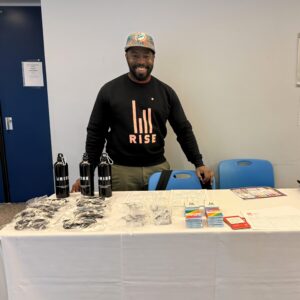
As successful as October has been, the goal of these moments is to amplify the work that is already being done and share why this work is needed. RISE works to address the intersection of intimate partner violence (IPV) and gun violence in New York City through community organizing strategies, building on neighborhoods’ strengths and values and supporting healthy and safe relationships. We host workshops in partnership with NYCHA developments, Crisis Management System (CMS) sites, and community centers, inviting community members to discuss the ways they think about IPV and how they show up when people are impacted by it.
Addressing Harm With The Next Generation
Long-held myths about IPV being a private issue and not a community one melt away as people begin to discuss how their own experiences of IPV, along with the experiences of their loved ones, spilled out into their neighborhoods. Such conversations are sprinkled with examples of times when people have supported or have been supported by people in the neighborhood around these experiences.
Alongside our public events to support the community, RISE hosts two programs to directly engage people who cause harm. RISE is the citywide provider for Respect First, which invites young people aged 13 to 21 to address unhealthy relationship norms, define respect, trust and consent for themselves, explore gender roles, and practice mindfulness as a tool to address harm they’ve caused and create new patterns.
Participants often report that they now think before they act and that they know how to listen to the information their body is giving them during conflict.
This invitation to reflect is an opportunity young people aren’t often offered. It is what allowed the young man to sit at a table playing Connect 4 for 30 minutes with me—who is, for all intents and purposes, a complete stranger—and discuss all his past relationships. Participants who complete Respect First often report that they now think before they act and that they know how to listen to the information their body is giving them during conflict.
RISE is also the provider for Respect and Responsibility in Staten Island and Brooklyn, a 12-week program for people aged 18 and older. Respect and Responsibility follows a similar model to Respect First. The first conversation asks participants what their values are and what they’ve done when they don’t live up to their own values. As we build understanding around trauma, intimate partner violence, and the harm participants caused to their partners, the values participants previously named are centered as pillars for growth and accountability.
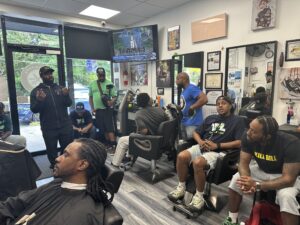
Both RISE programs offer voluntary, non-mandated options for people who have caused harm in a relationship. When the Center studied IPV in Brooklyn, it amplified that community members don’t often see criminal legal responses as supportive when they experience intimate partner violence. By offering voluntary services for people who cause harm, RISE creates more pathways to safety for people who experience harm directly and the people who experience the secondary impact of that harm.